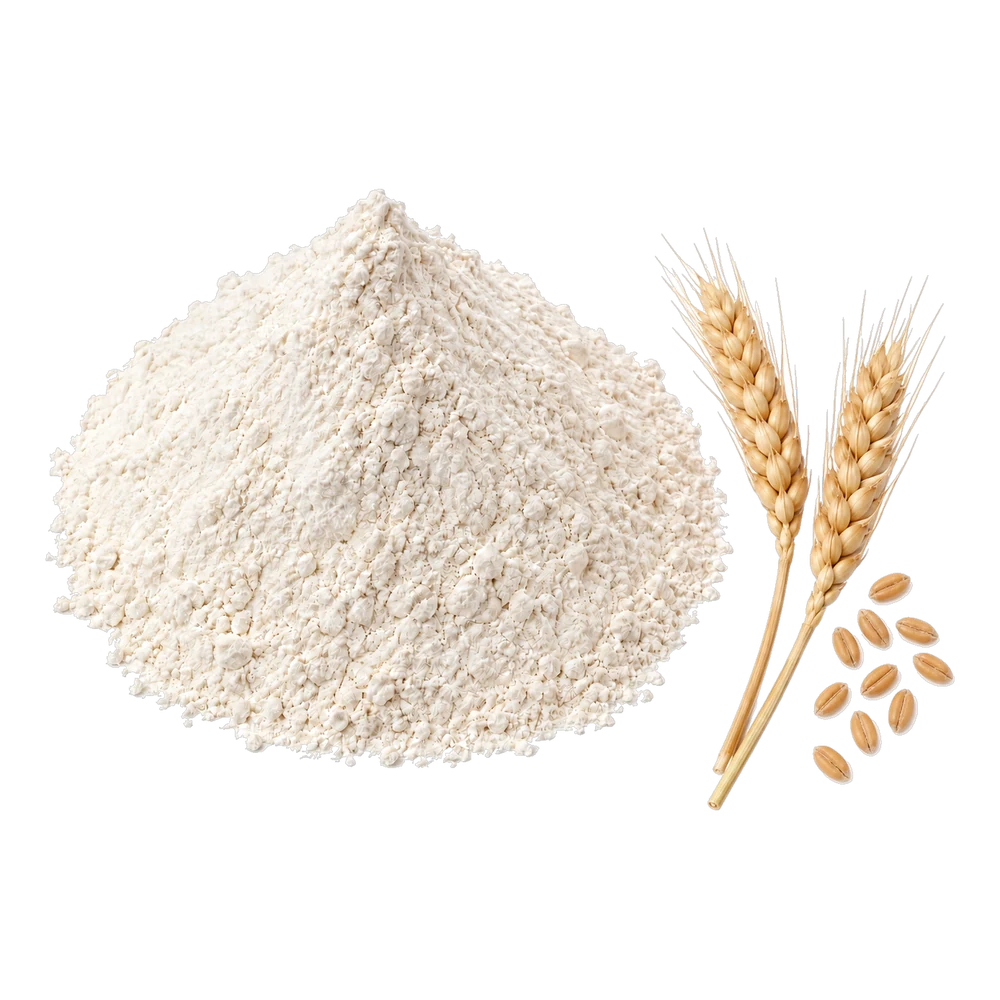
All-purpose white flour
Protein 7.0% min · ash 0.5% max
The reference line. Full specification published above. Germ and bran partly removed, 98% through a 212 micron sieve, 9 month shelf life.
Flour & baking ingredients
Milled wheat flour and cornmeal photographed close with wheat and corn
Wheat flour, cornmeal and corn starch for bakery, foodservice and retail programs, qualified on granulation and extraction.
Flour is bought on the sieve before it is bought on the name. Cornmeal covers everything from a coarse polenta grind to something close to flour, so every line below states the granulation it is milled to and the extraction it is milled at.
Reference product
The highest-volume line and the most fully documented, so its complete specification is published below. Every other line follows its own sheet at its own extraction and granulation.
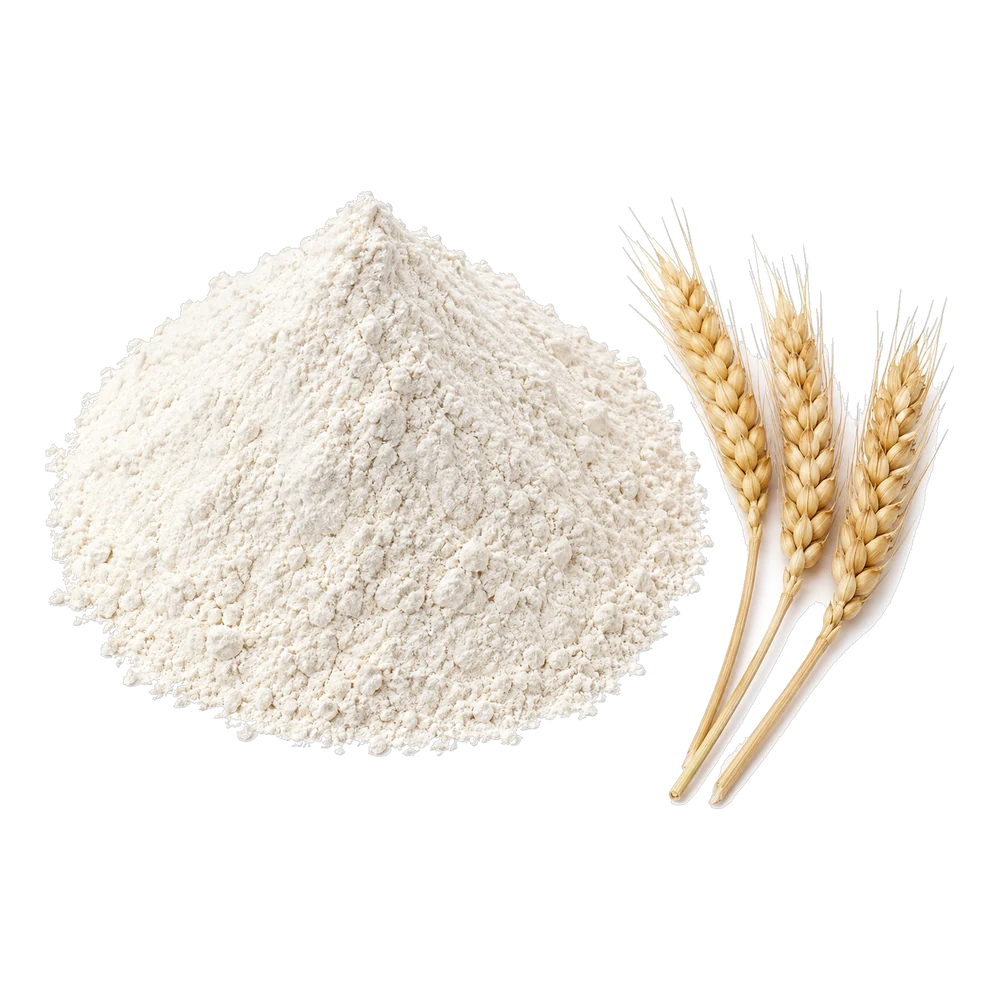
Technical specification
Target parameters with the limits the milling site works to. Each line carries its own sheet; the granulation changes with the product.
| Species | Triticum aestivum L. or Triticum compactum Host, or a mixture |
|---|---|
| Milling | Germ and bran partly removed, the remainder comminuted to a set fineness |
| Form and colour | White powder |
| Reference standard | Milled to the national milling standard the producing site works to, stated on the specification sheet |
| Moisture | 14% maximum |
|---|---|
| Total ash | 0.5% maximum |
| Protein, N x 5.7 | 7.0% minimum |
| Acid insoluble ash | 0.05% |
| Fat acidity | 50 mg KOH per 100 g maximum |
| Fineness | 98% minimum passes a 212 micron sieve, number 70 |
|---|
| Aflatoxins | Below 10 micrograms per kg |
|---|---|
| Why it matters | Mycotoxin limits are the parameter that most often stops a cereal shipment at entry, so they are tested per lot rather than per program |
| Shelf life | 9 months from production |
|---|---|
| Primary pack | 1 kg (2.2 lb) to 10 kg (22 lb), food-grade sealed |
| Secondary pack | Corrugated carton protecting the primary packs |
| Storage | Dry, away from direct sunlight |
| Order and schedule | Minimum order, lead time and delivery schedule are defined by the nature and breakdown of each supply program - product, format, brand and destination - and confirmed with the quotation. |
|---|---|
| Incoterms and payment | Programs are executed under Incoterms® 2020 - FOB, CFR, CIF, and DAP or DDP for selected destinations. Payment terms and shipment plan are confirmed with the quotation. |
Shelf life is counted from the date of production. Remaining shelf life at delivery depends on the production slot and transit for the selected program and is stated on the program sheet.
Every producing site is qualified before it enters a program: HACCP is a baseline requirement, and the site holds a recognised food-safety certification, FSSC 22000, BRC or ISO 22000, with the certificate, its scope and its expiry confirmed in writing for the selected product before the first order. Cereal programs additionally carry the mycotoxin analysis per lot, because aflatoxin is the parameter that most often stops a flour shipment at entry. Batch-specific analysis, applicable certificates and export documentation are provided to qualified buyers. Compliance and quality · US import compliance and FSVP.
Granulation, moisture, ash, protein and mycotoxin results are issued per lot against the agreed specification.
Figures are the specification limits for the reference line and are confirmed on the program specification before order.
Wheat
Two extractions from the same grain. The germ and bran are what separate them, and they change the shelf life as well as the colour.
Protein 7.0% min · ash 0.5% max
The reference line. Full specification published above. Germ and bran partly removed, 98% through a 212 micron sieve, 9 month shelf life.
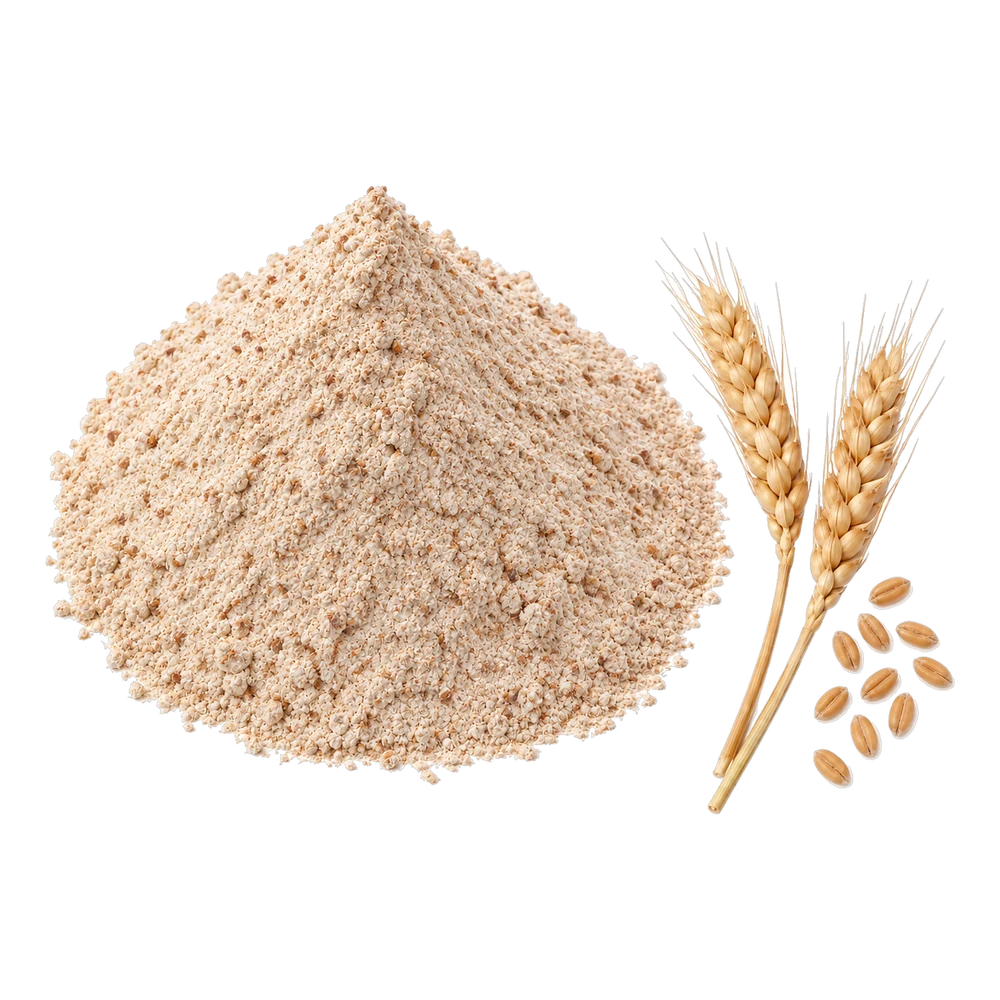
Protein 14% · crude fibre 10.8% max
Retains the germ and bran, which is why the crude fibre is declared. Ash 2.5% max, brownish colour characteristic of whole wheat. 339 kcal per 100 g.
Both lines are milled from common wheat, Triticum aestivum.
Corn
Three cornmeal grinds and a native starch. The two degermed lines share a granulation curve and differ only in the corn; the whole line is coarser and keeps the germ.
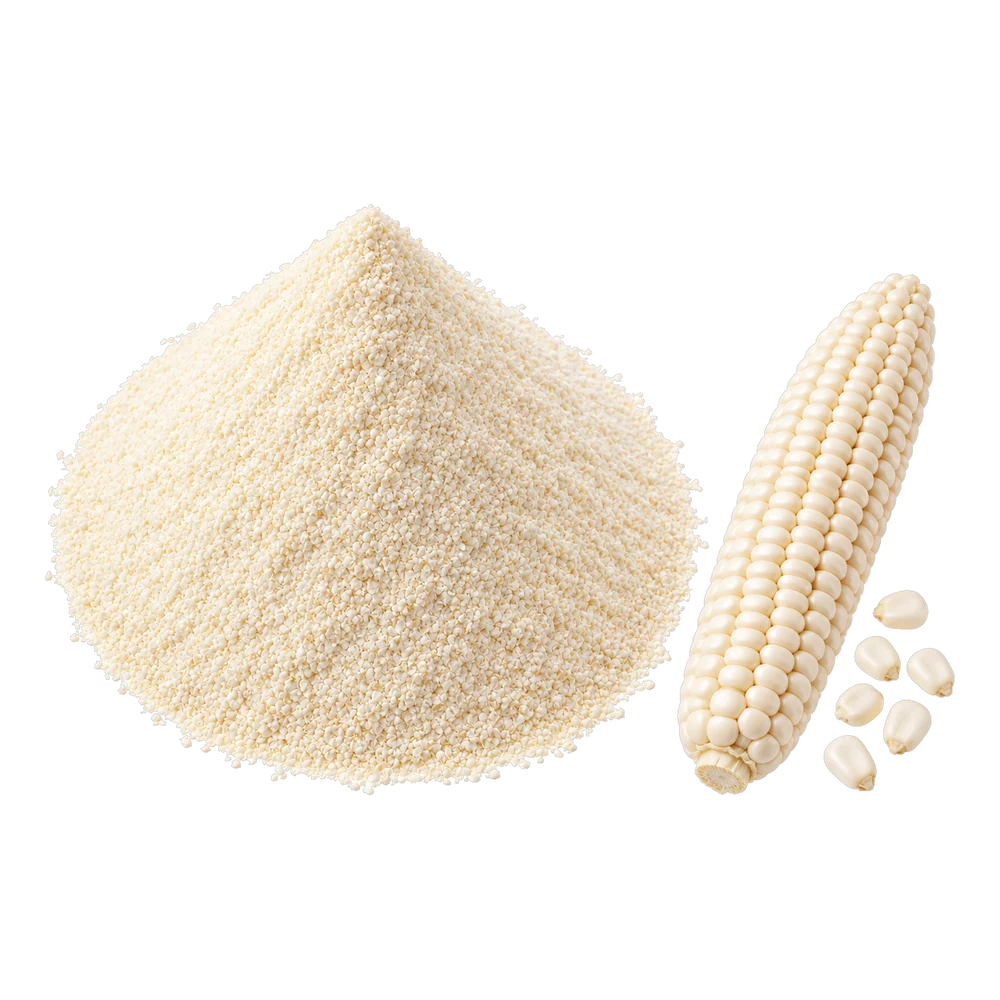
Crude fat 2.25% max
Degermed white corn. 95% through 0.85 mm, not more than 25% through 0.210 mm. Protein 7.0% min.
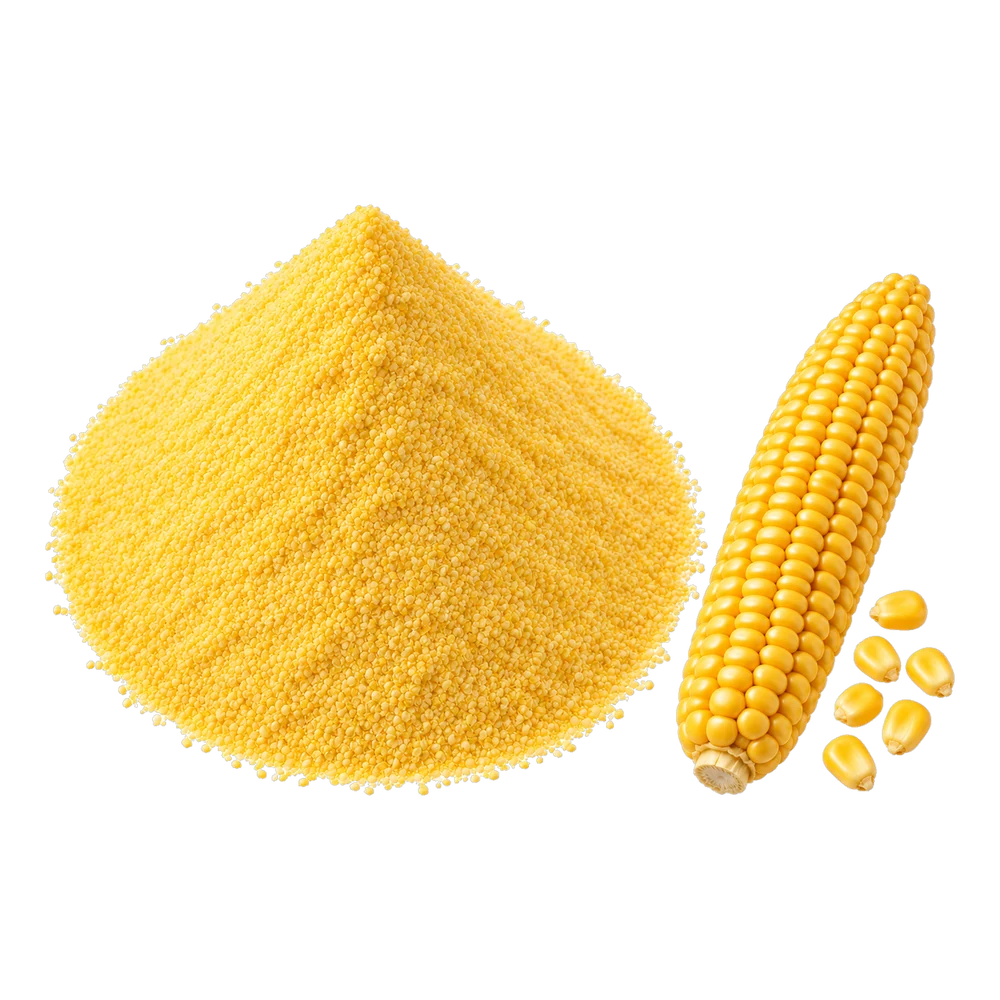
Crude fat 2.25% max
The same grind from yellow corn. 95% through 0.85 mm, not more than 25% through 0.210 mm.
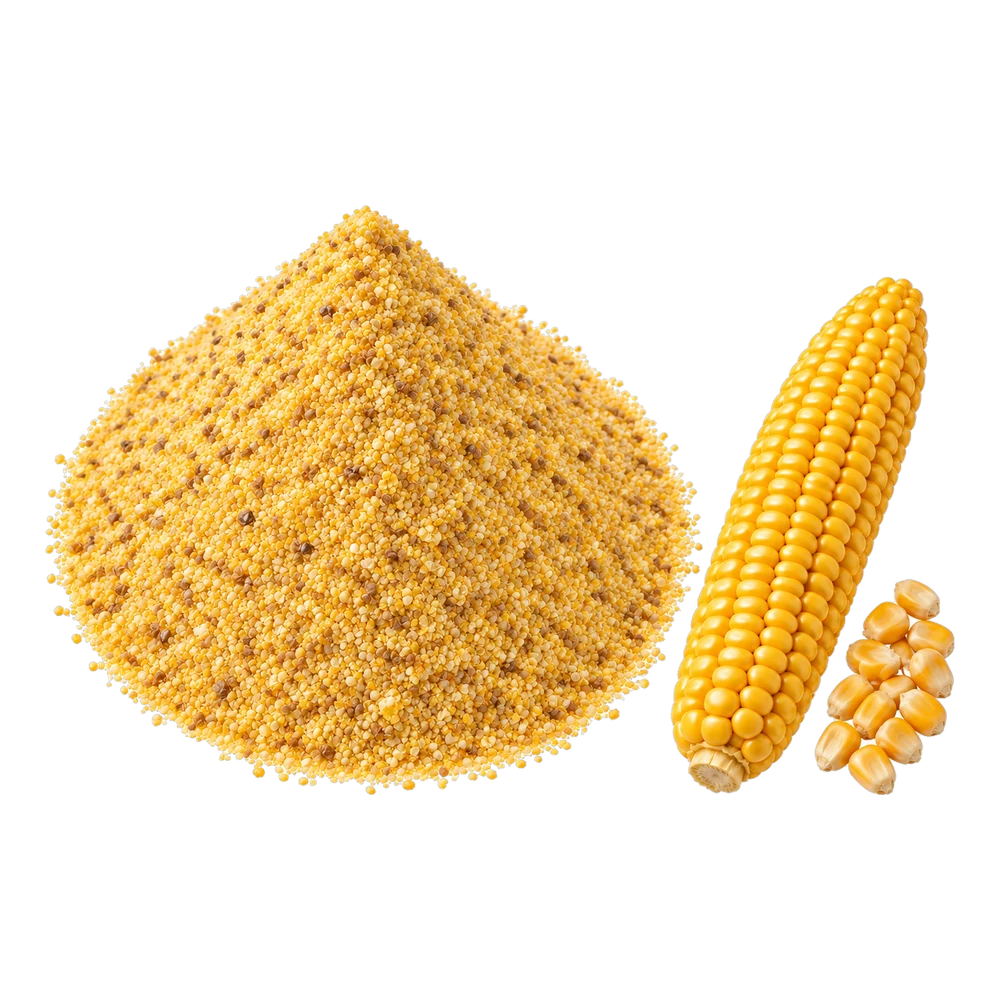
Ash 3% max · aflatoxin B1 below 5 ppb
Keeps the germ, so it is coarser and carries a declared aflatoxin limit. 95% through 1.70 mm.
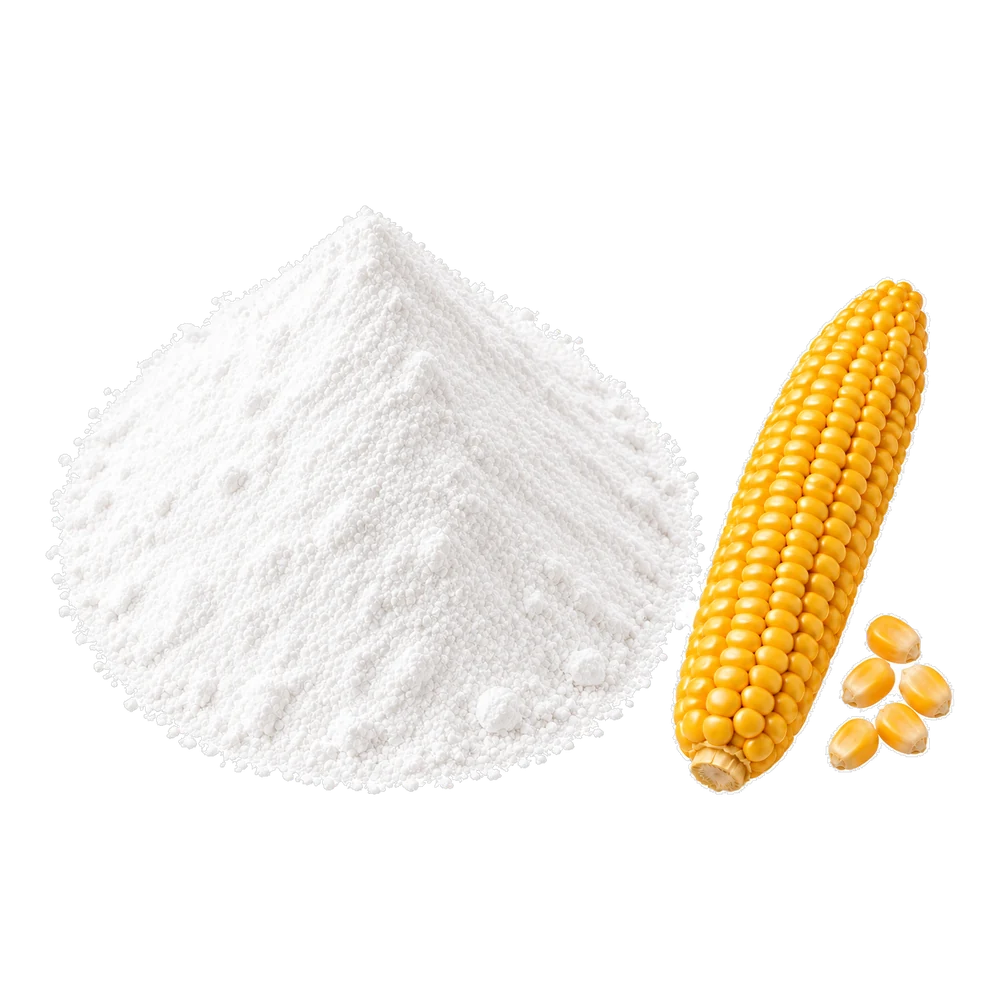
Viscosity 35,000 cp min
Native food-grade starch. Protein 0.5% max, fat 0.3% max, pH 5 to 6, 99.5% through 212 micron. Two year shelf life.
Degerming removes the oil-bearing germ, which is what gives the degermed lines their lower crude fat and their longer life.
The full range
Granulation is stated for every line, because a cornmeal sold by colour alone tells a baker nothing about how it will behave.
Extraction is the difference: all-purpose has the germ and bran partly removed, whole wheat retains them and carries the crude fibre to prove it.
| Line | Key limits | Granulation |
|---|---|---|
| All-purpose white flour | Moisture 14% max · ash 0.5% max · protein 7.0% min | 98% min through 212 micron |
| Whole wheat flour | Moisture 13% max · ash 2.5% max · protein 14% · crude fibre 10.8% max | Whole meal |
The two degermed lines are milled to the same curve and differ only in the corn used. Whole cornmeal keeps the germ, which is why its ash and its declared aflatoxin limit are both higher.
| Line | Key limits | Granulation |
|---|---|---|
| Cornmeal white, degermed | Moisture 12% max · ash 1% max · crude fat 2.25% max | 95% min through 0.85 mm · 25% max through 0.210 mm |
| Cornmeal yellow, degermed | Moisture 12% max · ash 1% max · crude fat 2.25% max | 95% min through 0.85 mm · 25% max through 0.210 mm |
| Cornmeal whole | Moisture 12% max · ash 3% max · aflatoxins below 10 ppb, B1 below 5 ppb | 95% min through 1.70 mm · 35% max through 0.212 mm |
| Edible corn starch | Moisture 14% max · protein 0.5% max · viscosity 35,000 cp min | 99.5% through 212 micron |
Granulation, extraction and the mycotoxin limit are fixed on the program specification before the first run, because a change to any of them changes how the product behaves in the bakery.
Request the full current rangePackaging
Primary packs are food-grade sealed; secondary packs are corrugated cartons that protect the primary through transport.
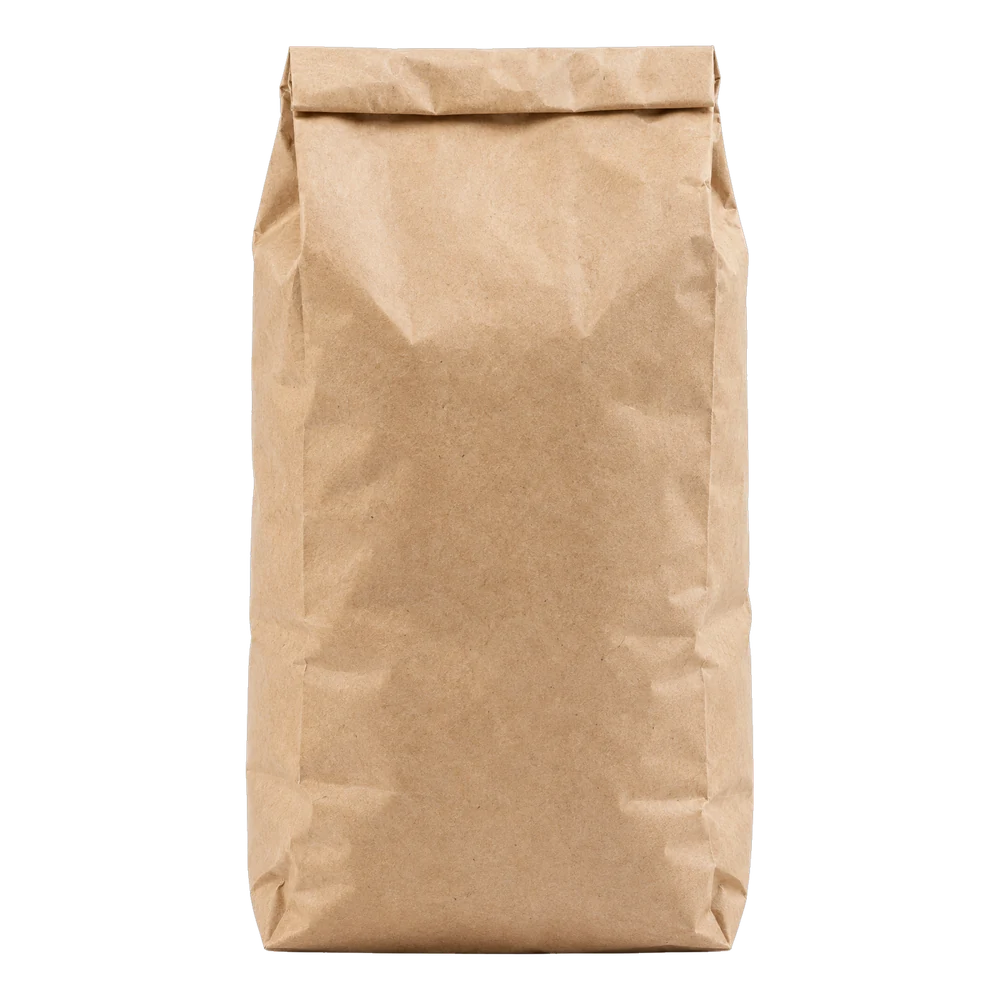
1 kg (2.2 lb) to 10 kg (22 lb)
Food-grade sealed bag, cartoned for transport. The standard retail and small-foodservice format.
See loading →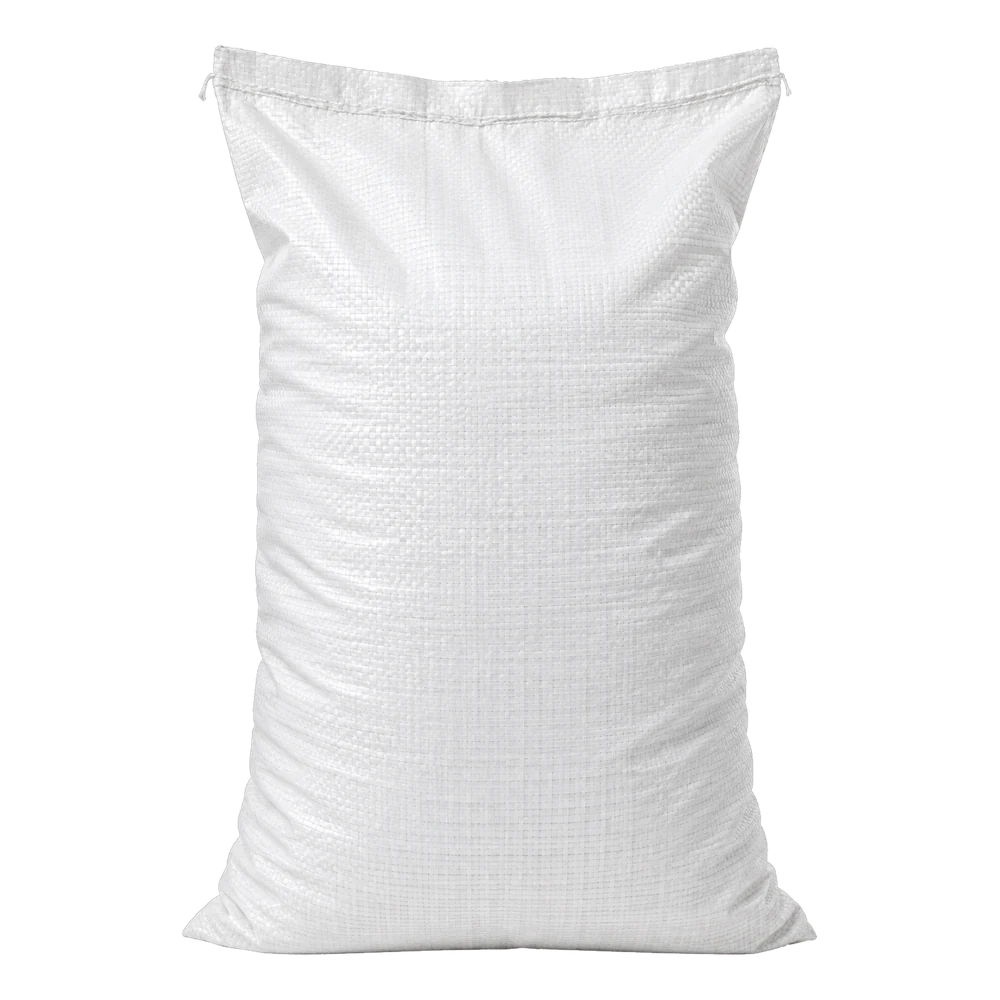
25 kg (55 lb) · 50 kg (110 lb)
The bakery and industrial format, for programs buying by the tonne rather than by the case.
See loading →Private label
Extraction, granulation, pack size, artwork and label declarations are configured under your brand, with documentation coordinated for the destination market before the first shipment.
All-purpose or whole, and the sieve curve the bakery needs.
Set against the intended use, because it decides how the dough behaves.
Retail bag or bulk sack, and the case configuration.
Mycotoxin limits and label declarations prepared for the destination market.
Supply execution
Samples follow once a program, specification and commercial terms are agreed.