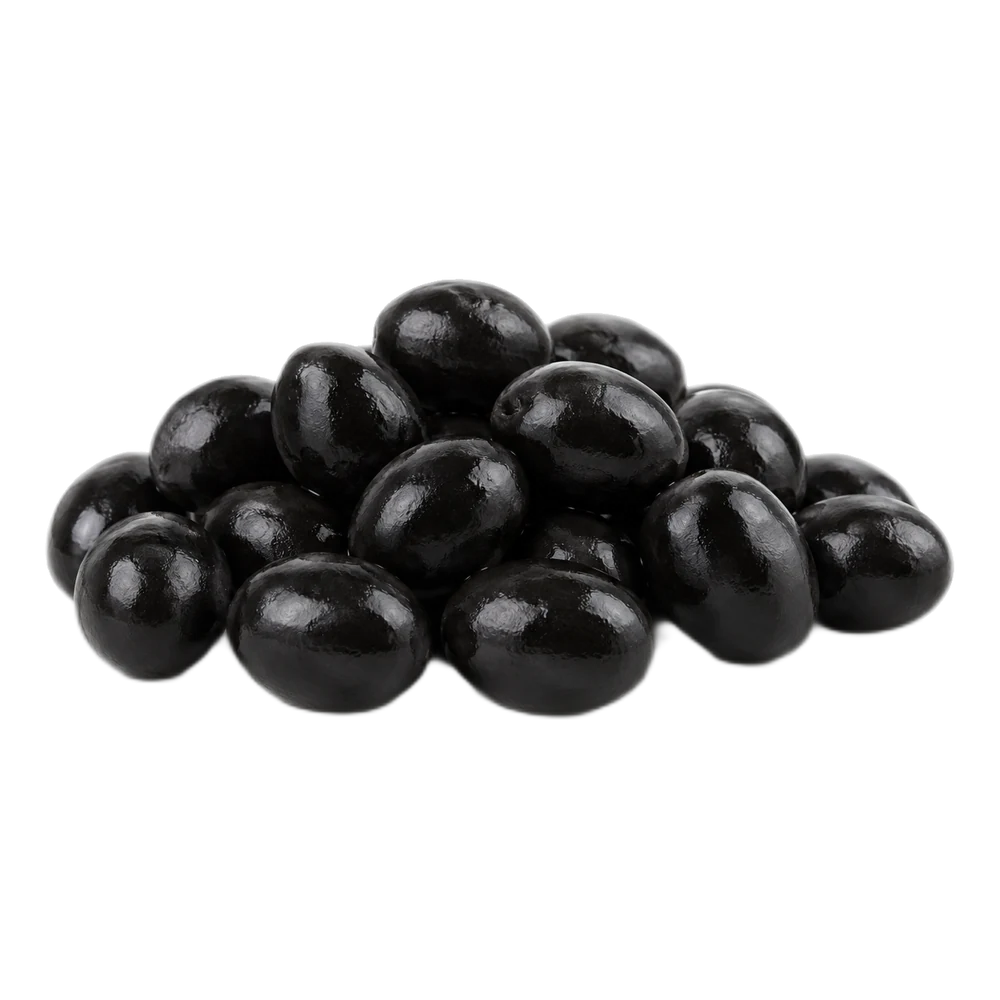
Whole black olives
Whole, stone in
Uniform whole fruit in brine, firm and fleshy, for retail, catering and repacking.
Inquire about this product: Whole black olivesRetail · Foodservice · Private Label
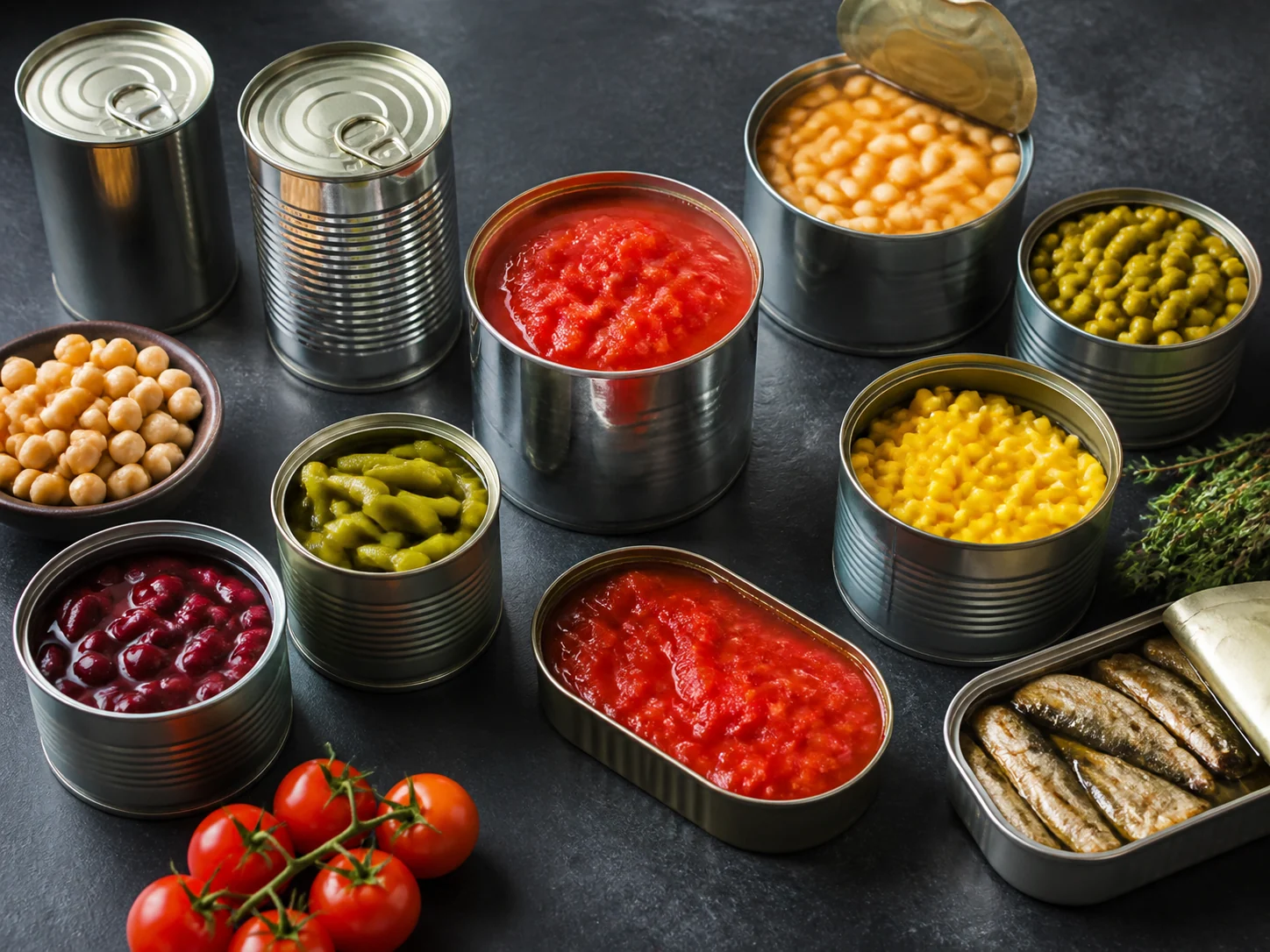
Unbranded foodservice cans of black and green olives in brine on a dark slate surface under warm directional light.
ALPHATRADE supplies table olive programs in black and green, each available whole, pitted or sliced, packed in brine in foodservice and retail cans. Color, cut, can format, case configuration and destination-market documentation are aligned before order.
For importers, distributors, retailers, foodservice groups and food manufacturers.
Select categories for one inquiry. Your selection stays in this browser tab; it is sent only when you submit the form.
Reference configuration
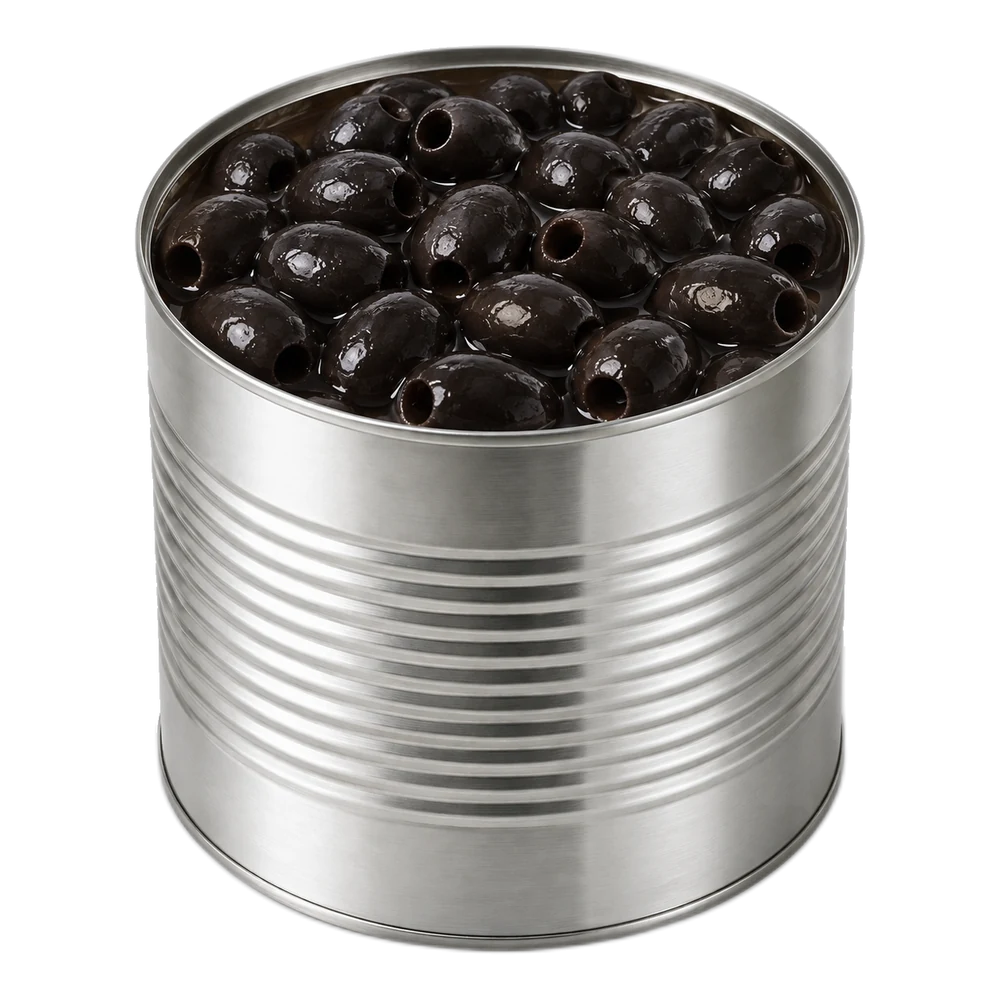
This reference configuration illustrates a foodservice program in the #10 / A10 can. Final color, cut, can format, case configuration and documentation are confirmed for the selected program.
Technical dossier
Final product specification, analysis parameters, packing configuration and supporting documentation are confirmed for the selected program before order.
OriginEgypt
| Product | Pitted black olives in brine |
|---|---|
| Category | Canned table olives, Class I |
| Ingredients | Black olives, water, salt, lactic acid, calcium chloride, ferrous gluconate as color stabilizer |
| Appearance | Uniform, clean, well formed, free from visible defects and foreign matter |
| Color | Black skin with brown flesh |
| Texture | Firm and fleshy, not soft or spongy |
| Salt content | 1.0 – 3.0% |
|---|---|
| pH | 6.0 – 7.5 |
| Ferrous gluconate | 150 ppm |
| Vacuum | 5 inches Hg minimum |
| Total defects | 15% maximum |
| Thermal process | Sterilized in a hermetically sealed can |
| Total plate count | Absent per the producer specification; method and unit confirmed per program |
|---|---|
| Coliforms | Absent |
| Escherichia coli | Absent |
| Staphylococcus aureus | Absent |
| Salmonella | Absent |
| Yeasts and molds | Below 10 CFU per g |
| Hepatitis A virus | Not detected per 25 g |
| Lead | Not detected; method and detection limit confirmed per program |
|---|---|
| Pesticide residues | Not detected; method and detection limit confirmed per program |
| Color deviation | Below 2 pieces accepted per can |
|---|---|
| Foreign body, organic | Below 2 units accepted per can |
| Foreign body, inorganic | Zero tolerance |
| Allergens · GMO · irradiation | Allergen, GM and irradiation status are confirmed for the selected product before order |
|---|---|
| Shelf life | 24 months from date of production |
| Storage | Store at room temperature in a cool, dry place away from direct sunlight |
| Order and schedule | Minimum order, lead time and delivery schedule are defined by the nature and breakdown of each supply program - product, format, brand and destination - and confirmed with the quotation. |
|---|---|
| Incoterms and payment | Programs are executed under Incoterms® 2020 - FOB, CFR, CIF, and DAP or DDP for selected destinations. Payment terms and shipment plan are confirmed with the quotation. |
Origin is confirmed for the selected program and stated on the shipping documents. Shelf life is counted from the date of production. Remaining shelf life at delivery depends on the production slot and transit for the selected program and is stated on the program sheet.
Producing sites are qualified against the selected product and destination requirements, with HACCP as a baseline. Where a program requires a specified food-safety certification, the certificate, scope and expiry are confirmed before the first order. For U.S. programs, black ripe olives are generally managed as low-acid canned foods. Green-olive classification is confirmed for the actual formulation, fermentation or acidification method, finished equilibrium pH, water activity, process and container; fermented green olives are not automatically acidified foods. Any applicable FCE registration and scheduled-process filing are verified for the selected product and container format before quotation. Batch-specific analysis, applicable certificates and export documents are provided to qualified buyers. Compliance and quality · US import compliance and FSVP.
Documents available on request: Technical Data Sheet, Certificate of Analysis, thermal process documentation, applicable certification and registration documentation, and shipping/commercial documents.
Target parameters shown for pitted black olives in brine. Green olives follow their own specification: they are pasteurized rather than sterilized, and sit at pH 3.0 to 4.0 with a salt content of 3.0 to 4.0%. Each cut and color is confirmed for the selected program.
Black olives
Cut, can format, case configuration and documentation are confirmed for the selected supply program.
Whole, stone in
Uniform whole fruit in brine, firm and fleshy, for retail, catering and repacking.
Inquire about this product: Whole black olives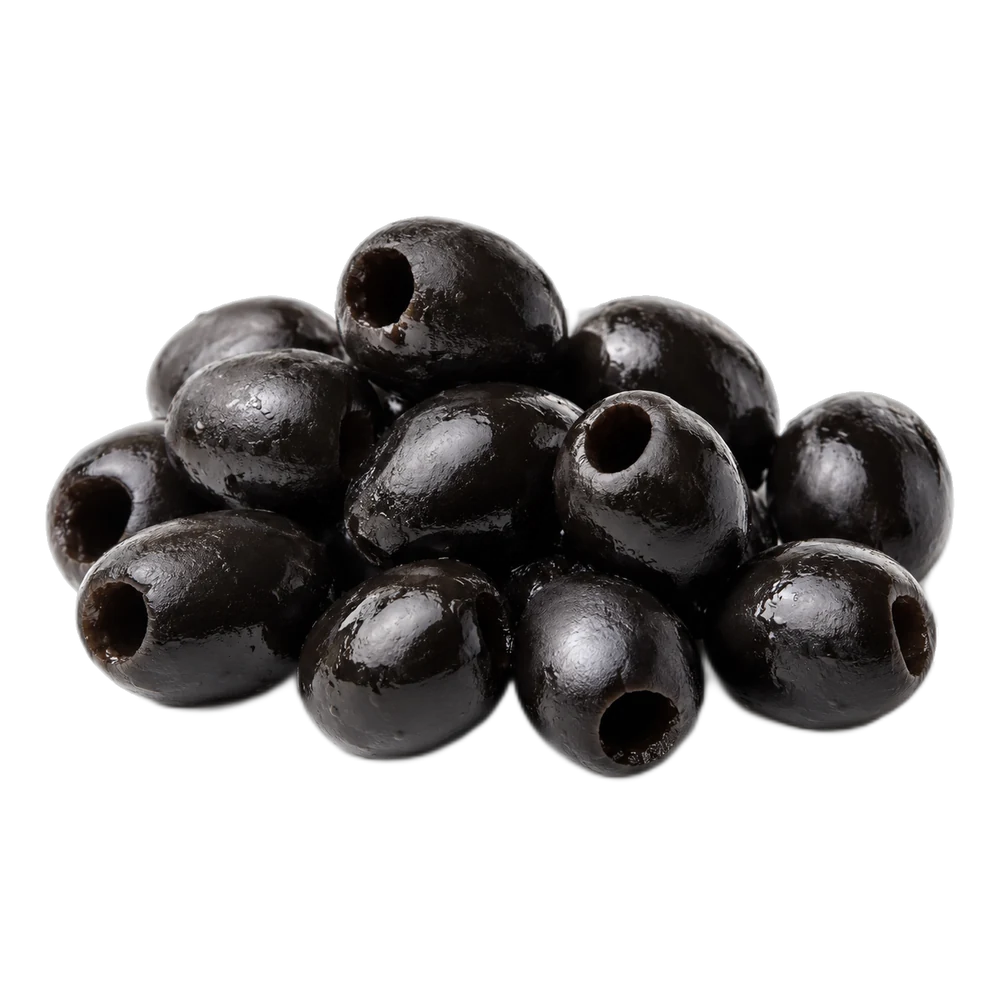
Whole, pitted
Whole fruit with the stone removed, the standard catering and retail cut.
Inquire about this product: Pitted black olives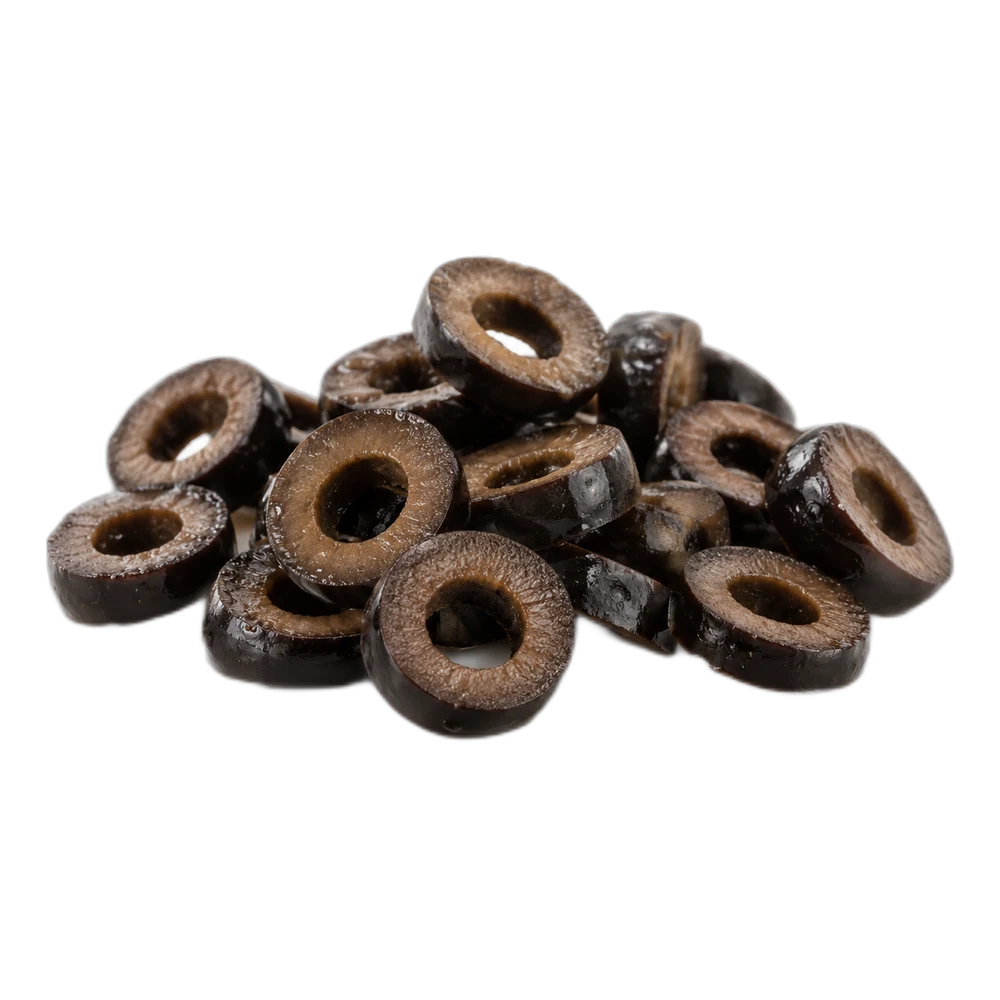
Rings, pitted
Even rings for pizza, salad, ready meals and foodservice preparation.
Inquire about this product: Sliced black olivesGreen olives
Green olives are pasteurized and carry their own acidity and salt range, confirmed for the selected program.
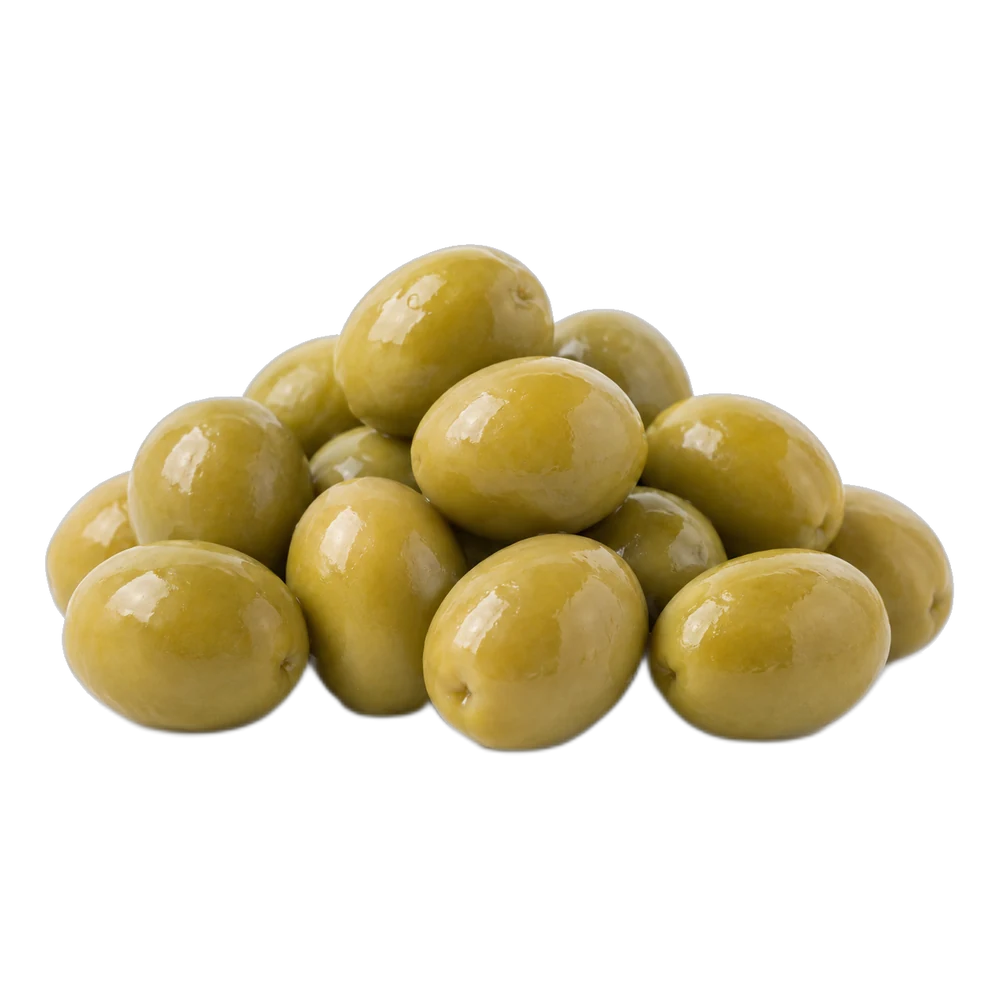
Whole, stone in
Crisp-tender whole fruit in brine, for retail, catering and repacking.
Inquire about this product: Whole green olives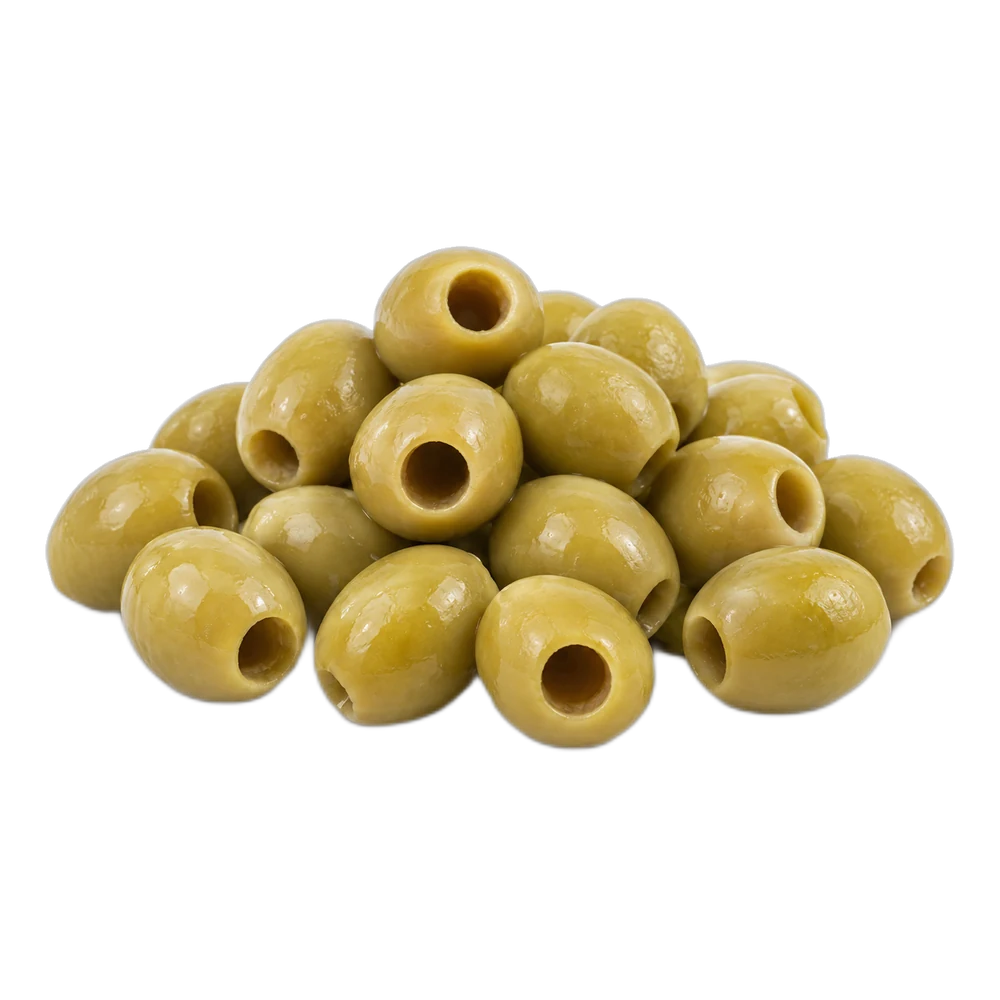
Whole, pitted
Whole green fruit with the stone removed, for retail and foodservice.
Inquire about this product: Pitted green olives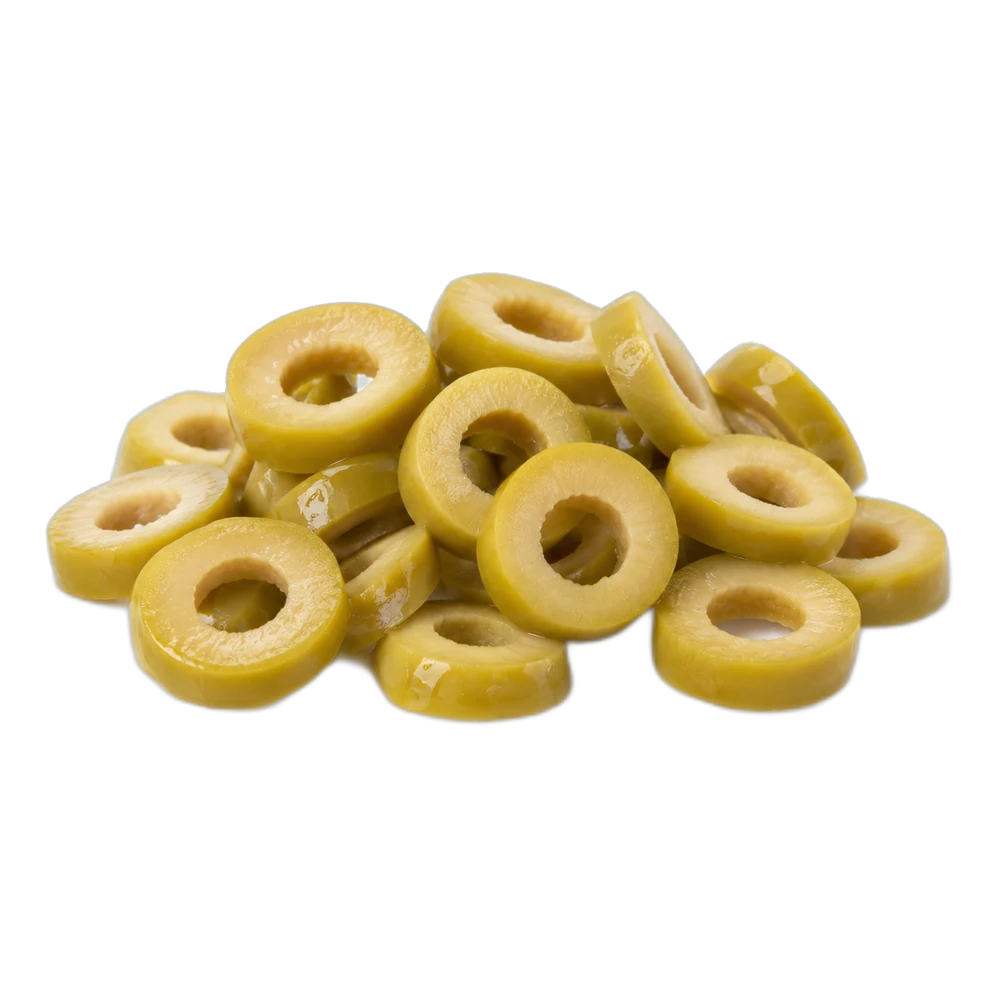
Rings, pitted
Even green rings for salad, sandwich and ready-meal preparation.
Inquire about this product: Sliced green olivesGreen olives are packed with lactic, ascorbic and citric acid and are crisp-tender in texture. Stuffed and marinated preparations are assessed against a current producing-site specification before they are offered.
Packaging options
Formats, case configuration and availability are confirmed for the selected program.
Illustrative pack; final artwork confirmed for the program.
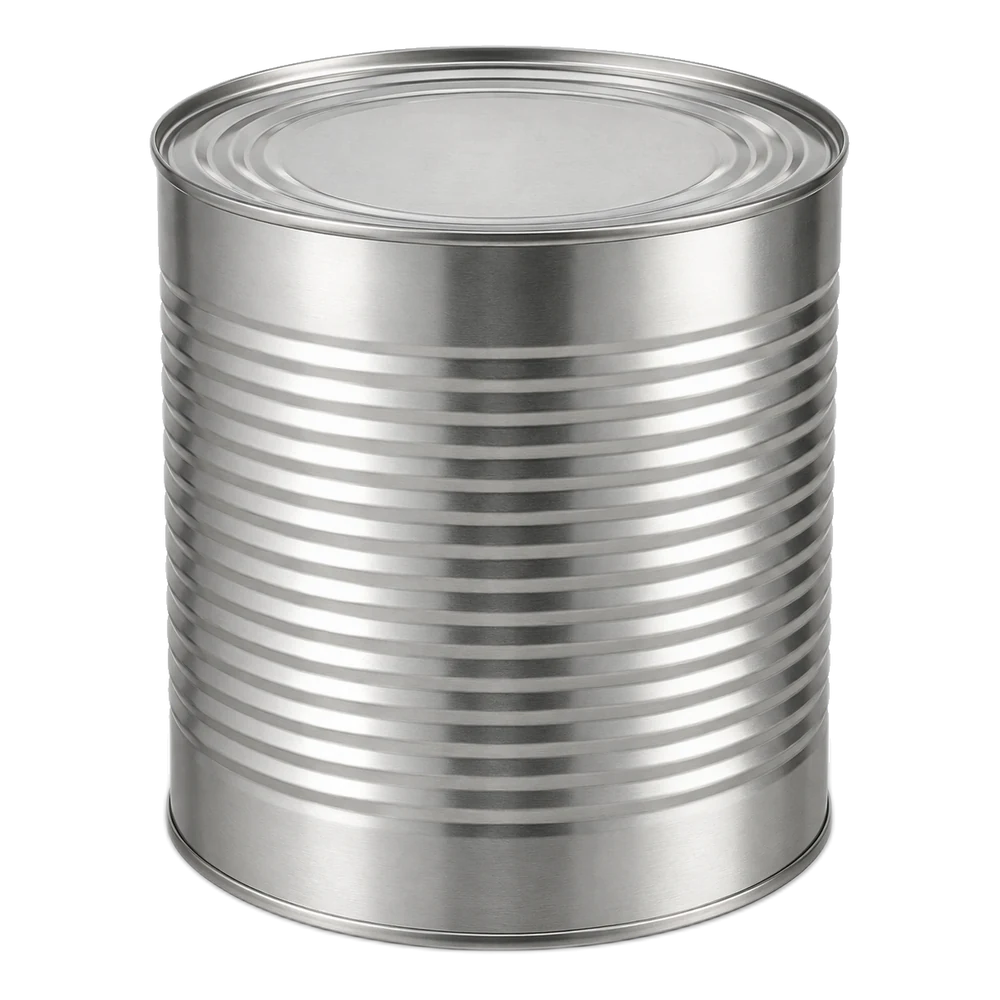
3000 g (105.8 oz)
Full-size foodservice can for kitchens, processors and repacking programs.
See cuts: Foodservice can #10 / A10 →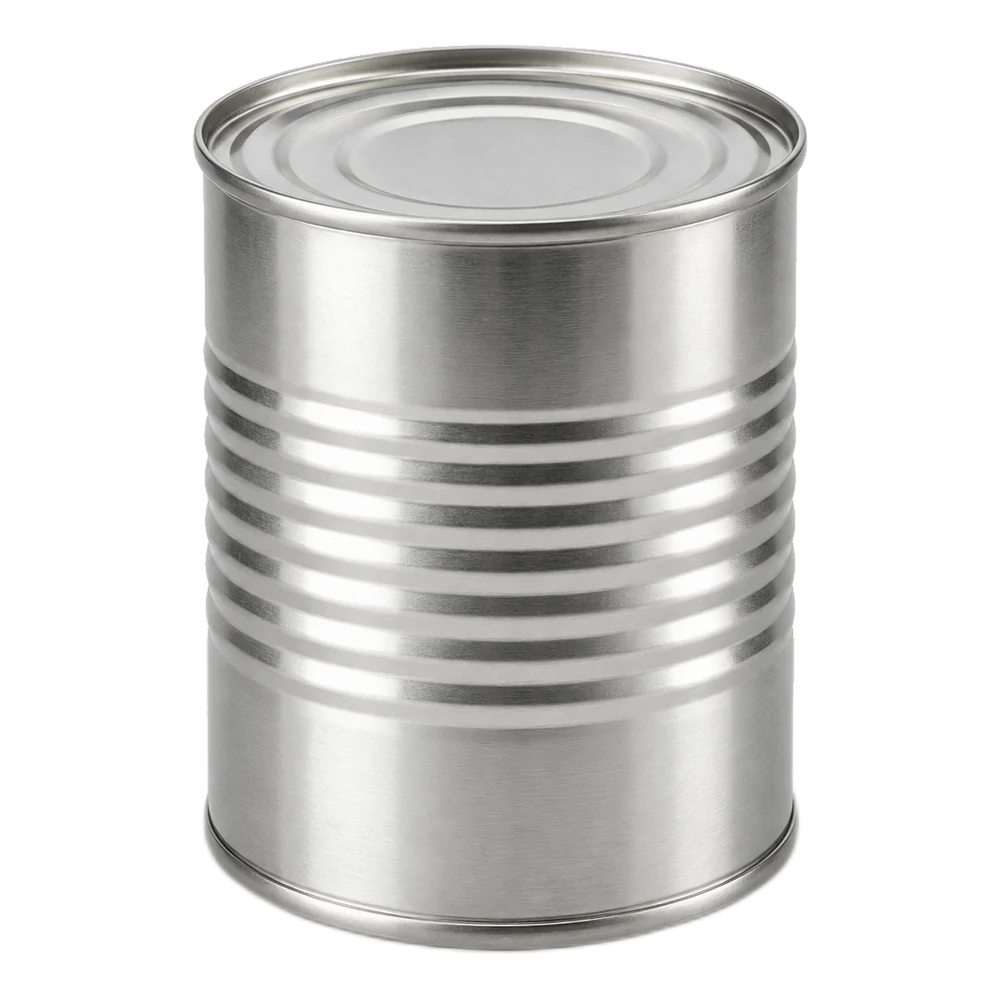
400 g (14.1 oz)
Standard retail can for supermarket, wholesale and private-label programs. Cased or shrink-wrapped to buyer preference.
See cuts: Retail can →
Per format
Corrugated export carton, palletized and wrapped for container loading.
Request a quote: Export carton →Private label
Color, cut, can format, lid type, case configuration, label and artwork are configured under your brand, with specification and documentation coordinated for the destination market before the first shipment.
Olive color and cut assessed for the target channel and application.
Can format, lid, case configuration and artwork coordinated for the brand.
Specification, analysis and labeling reviewed for the receiving market before order.
Dispatch planned on pallets, wrapped and protected against denting in transit.
Supply execution
Olive programs are planned for the agreed color, cut, can format and destination requirements, with process and laboratory documentation aligned before shipment.
Buyer FAQ
ALPHATRADE supplies canned olives from Egypt and contracts with you as seller. Your brand and label artwork are combined with a color and cut from this page, and specification, artwork coordination, production, documentation and delivery are managed as one program.
Two can formats are documented on this page: the #10 / A10 foodservice can at 3,000 g (105.8 oz) and the 400 g (14.1 oz) retail can. In the US this format is the #10 can; A10 is the European name, and exact can dimensions are confirmed per product. The colors and cuts in the range, with their target parameters and quality tolerances, are set out in the specification above; the color and cut are confirmed for the program before the first order.
Low-acid canned foods and acidified foods under 21 CFR 113 and 114 require the plant and the thermal process to be registered with the FDA, producing an FCE number for the establishment and an SID for the process. This is separate from the food-safety certificate and is not established by it. Applicability is determined for the specific product, formulation, process and packaging, and is confirmed before a canned program is quoted for the United States.
Facilities subject to FDA food facility registration must hold a current registration, and required registrations are renewed between October and December of each even-numbered year. A lapsed registration is a problem at entry, not a paperwork detail. Applicability and exemptions are checked for the selected program, and registration status is confirmed for the producing site before a United States program is agreed.
FSVP obligations sit with the designated FSVP importer, where applicable, and producing facilities keep their own applicable FDA obligations. The Foreign Supplier Verification Program is the importer's duty under FSMA, not the supplier's, and the FSVP importer is generally the US owner or consignee at entry, which may be a different company from the customs importer of record. Prior Notice must reach the FDA before arrival, filed by the designated filer. ALPHATRADE supplies the supplier-side evidence the importer's file requires and provides the product, producing-site and shipment data the filer needs.
Questions that apply to every program, on certification, the documents that travel with each lot and United States entry, are answered on Compliance & Quality and US food import compliance.
Buyer guides
Classification, FCE and process filing explained
The renewal window, the US agent rule and what a lapse costs
Deadlines, filing windows and why filings fail
Label elements, dual units, allergens and origin marking