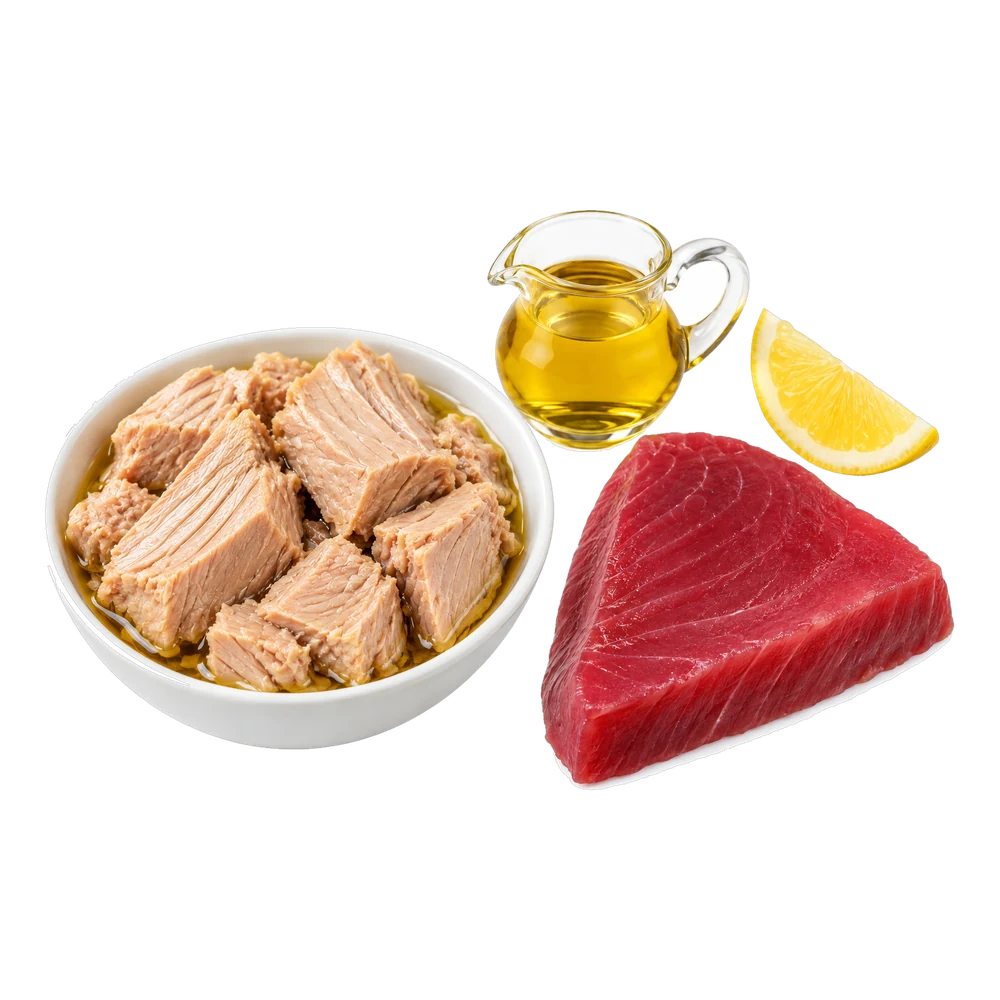
Yellowfin chunk in oil
Thunnus albacares · drained 98 g (3.5 oz)
The reference line. Full specification published above. Chunk to flake 70 to 30, salt 0.5%.
Tuna, sardines & canned fish
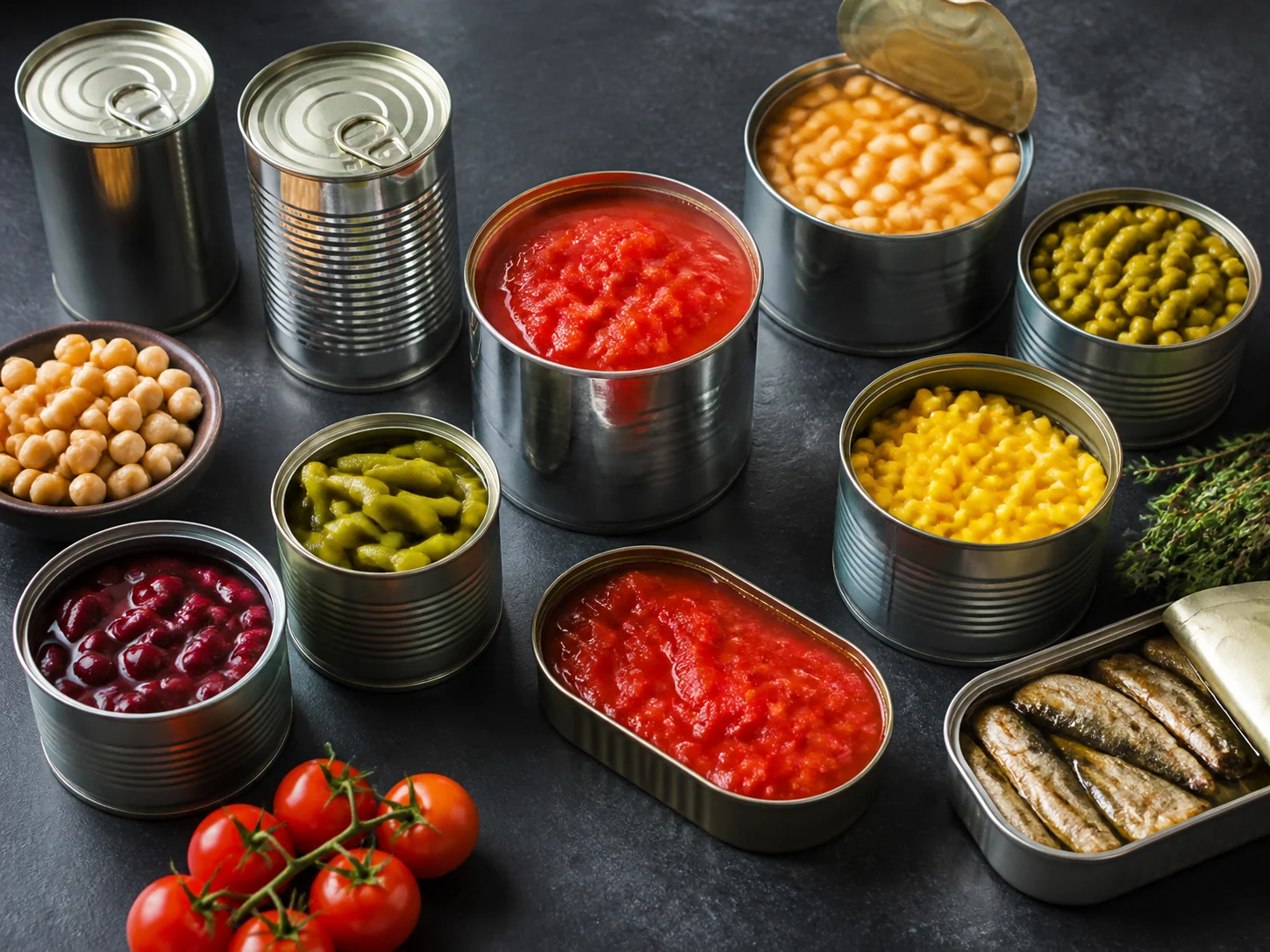
Canned tuna and sardines photographed close, opened and plated
Canned tuna and sardines for retail and foodservice, qualified by species, cut and packing medium.
Canned fish is bought on species before it is bought on format. Skipjack and yellowfin are different fish at different prices, and two tins both labelled sardine can hold animals from different oceans. Every line below states its binomial and its catch area.
Reference product
The most fully documented line in the range, so its complete specification is published below. Every other line follows its own sheet at its own species, drained weight and packing medium, confirmed for the selected program.
Technical specification
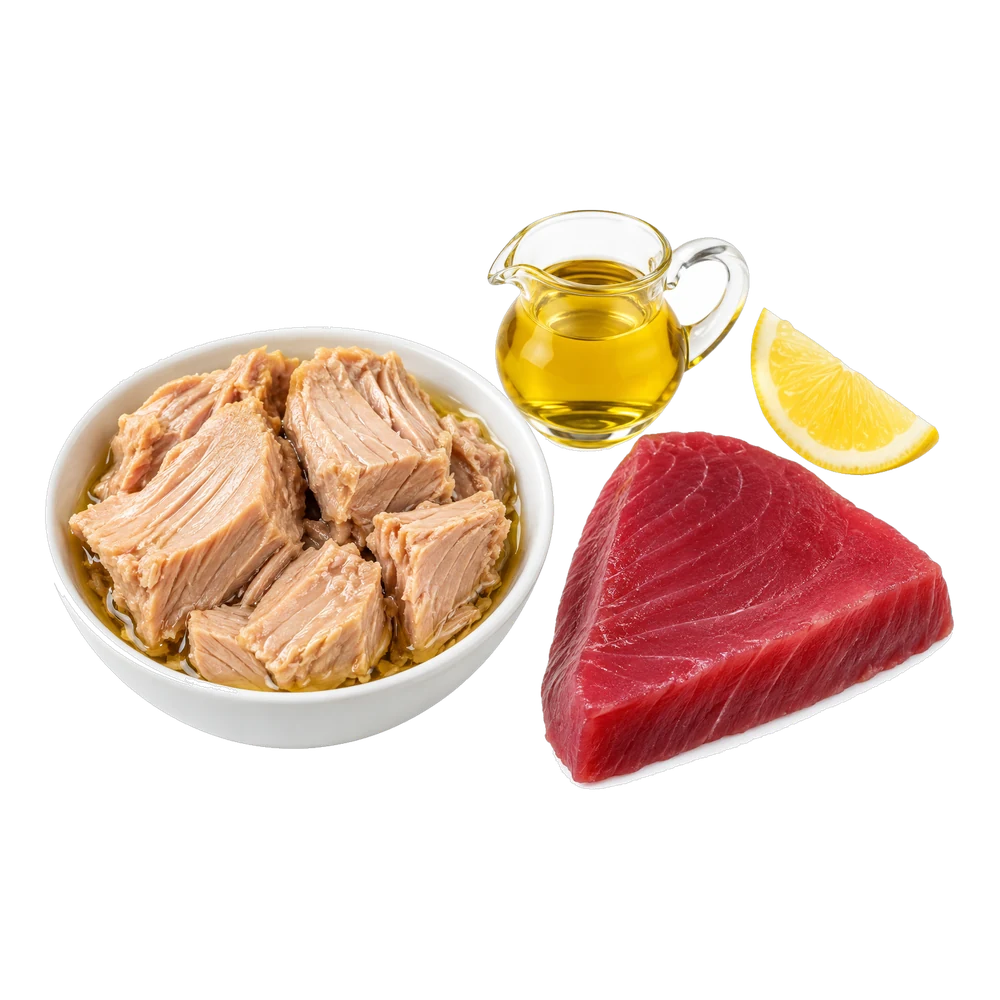
The specification for the reference line. Each species and medium carries its own sheet; drained weight and composition change with the medium.
| Species | Thunnus albacares, yellowfin tuna |
|---|---|
| Tuna | 69.01% of the formulation |
| Oil | 21.69% |
| Water | 7.8% |
| Salt | 0.5%, food grade |
| Tariff heading | HS 1604 |
| Declared net weight | 142 g (5.0 oz) |
|---|---|
| Drained weight | 98 g (3.5 oz) |
| Chunk to flake ratio | 70 to 30 |
| Oil to brine ratio | 70 to 30 |
| Process loss | Plus or minus 2% through manufacturing |
| Histamine | Below 35 ppm, method ELISA |
|---|---|
| US limit for comparison | FDA defect action level for tuna is 50 ppm |
| EU limit for comparison | Regulation 2073/2005 works to 100 mg per kg |
| Genetically modified ingredients | None used in the formulation |
| Unopened | Ambient |
|---|---|
| Opened | 0 to 4 degrees Celsius, transferred to a non-metallic airtight container |
| After opening | Consume within 3 days |
| Delivery temperature | Minimum 5, maximum 40 degrees Celsius |
| Date marking | Best before or expiry printed on the top or the bottom of every can |
| Carton | 349 x 261 x 140 mm, three-layer B flute |
|---|---|
| Empty carton | 260 g |
| Gross carton weight | 9.1 kg (20.1 lb) |
| Order and schedule | Minimum order, lead time and delivery schedule are defined by the nature and breakdown of each supply program - product, format, brand and destination - and confirmed with the quotation. |
|---|---|
| Incoterms and payment | Programs are executed under Incoterms® 2020 - FOB, CFR, CIF, and DAP or DDP for selected destinations. Payment terms and shipment plan are confirmed with the quotation. |
Shelf life is counted from the date of production. Remaining shelf life at delivery depends on the production slot and transit for the selected program and is stated on the program sheet.
Quality documentation is confirmed for the selected program and destination market. Batch-specific analysis, applicable certificates and export documentation are provided to qualified buyers. Compliance and quality · US import compliance and FSVP.
Histamine, sterilisation value and microbiological results are issued per lot against the agreed specification, with the analysis method recorded beside each limit.
Figures are the specification limits for the reference line and are confirmed on the program specification before order.
Tuna
Chunk packs in the two standard media. Drained weight is stated for each because the medium changes it.
Thunnus albacares · drained 98 g (3.5 oz)
The reference line. Full specification published above. Chunk to flake 70 to 30, salt 0.5%.
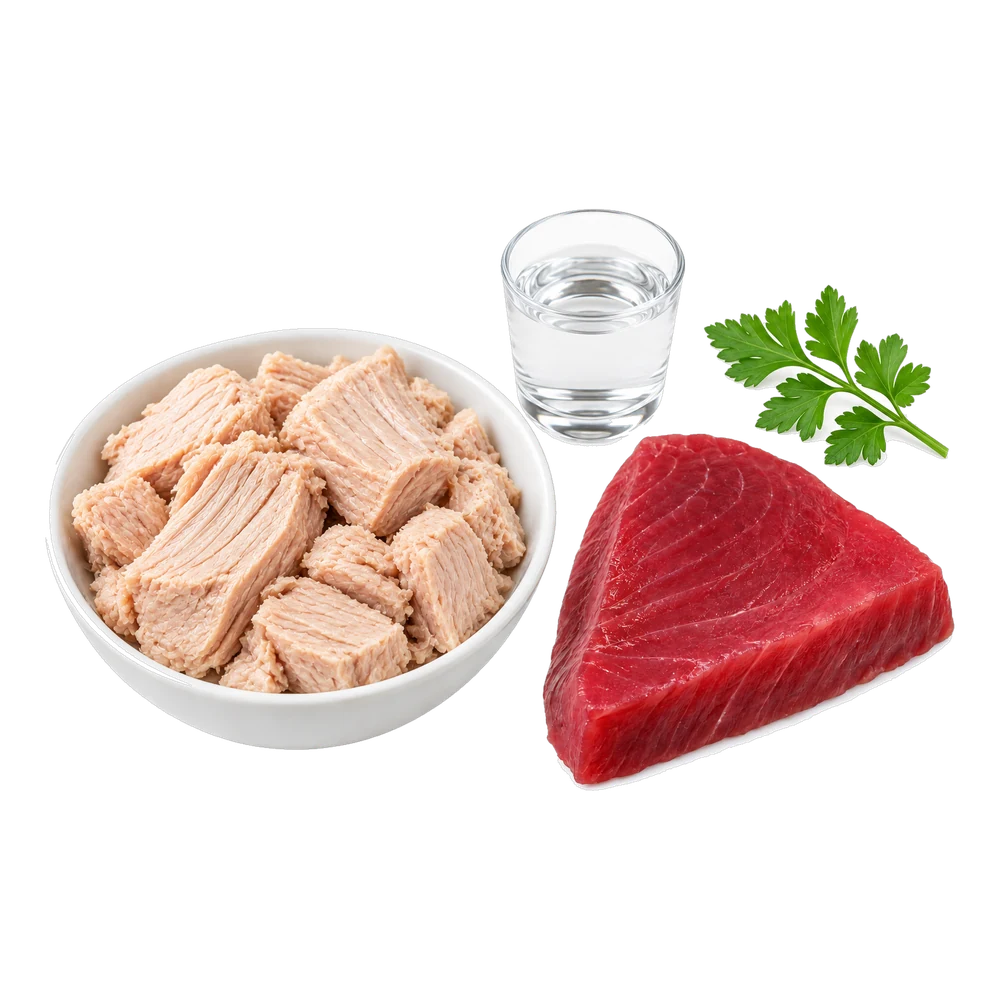
Thunnus albacares · drained 98 g (3.5 oz)
The same cut packed in water rather than oil, for lower-fat retail and foodservice programs.
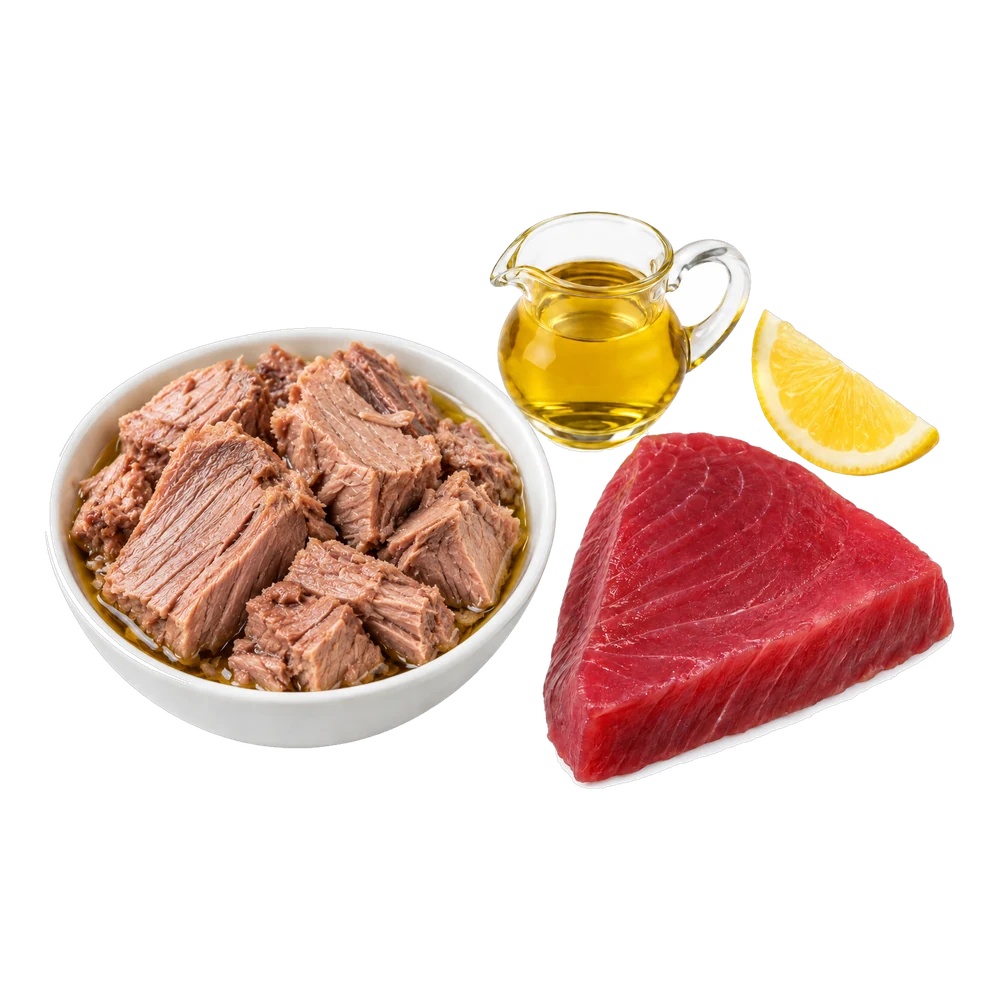
Katsuwonus pelamis
Cooked, skinned and trimmed of blood muscle. Drained not less than 70% of net weight, chunk not less than 1.2 cm.
Each line carries its own specification sheet at the species shown.
Tomato sauce
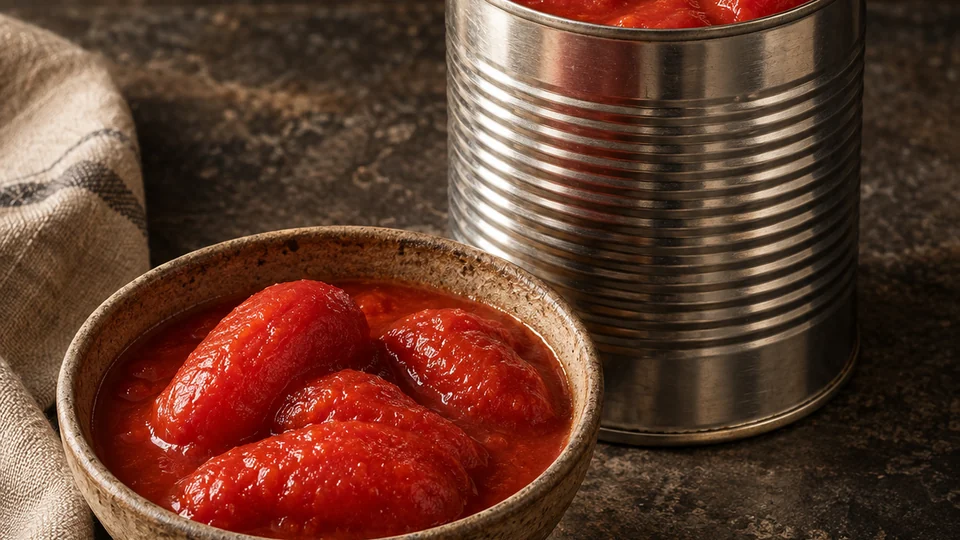
The tomato-sauce family, produced as single cans and as three-can sleeves for retail multipacks.
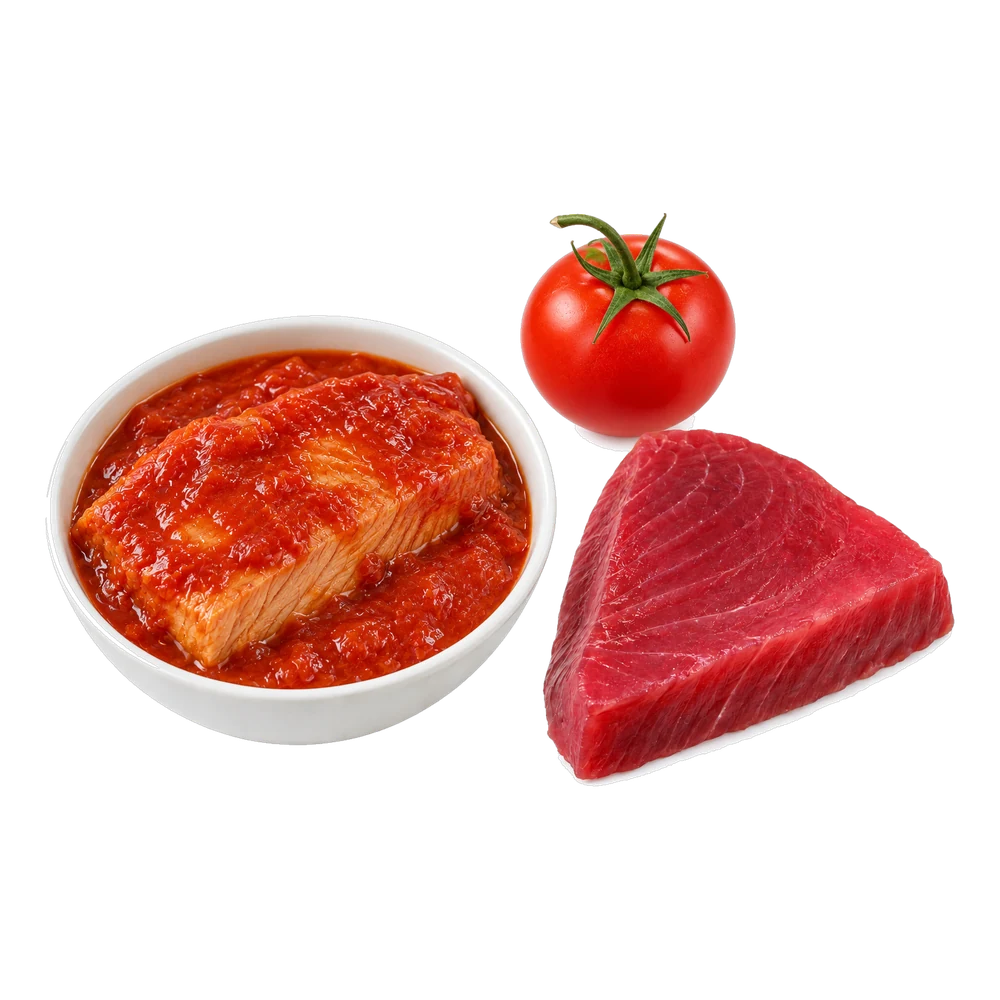
85 g (3.0 oz) · 125 g (4.4 oz)
Whole marinated tuna in tomato sauce. Also produced as an 85 g three-can sleeve.
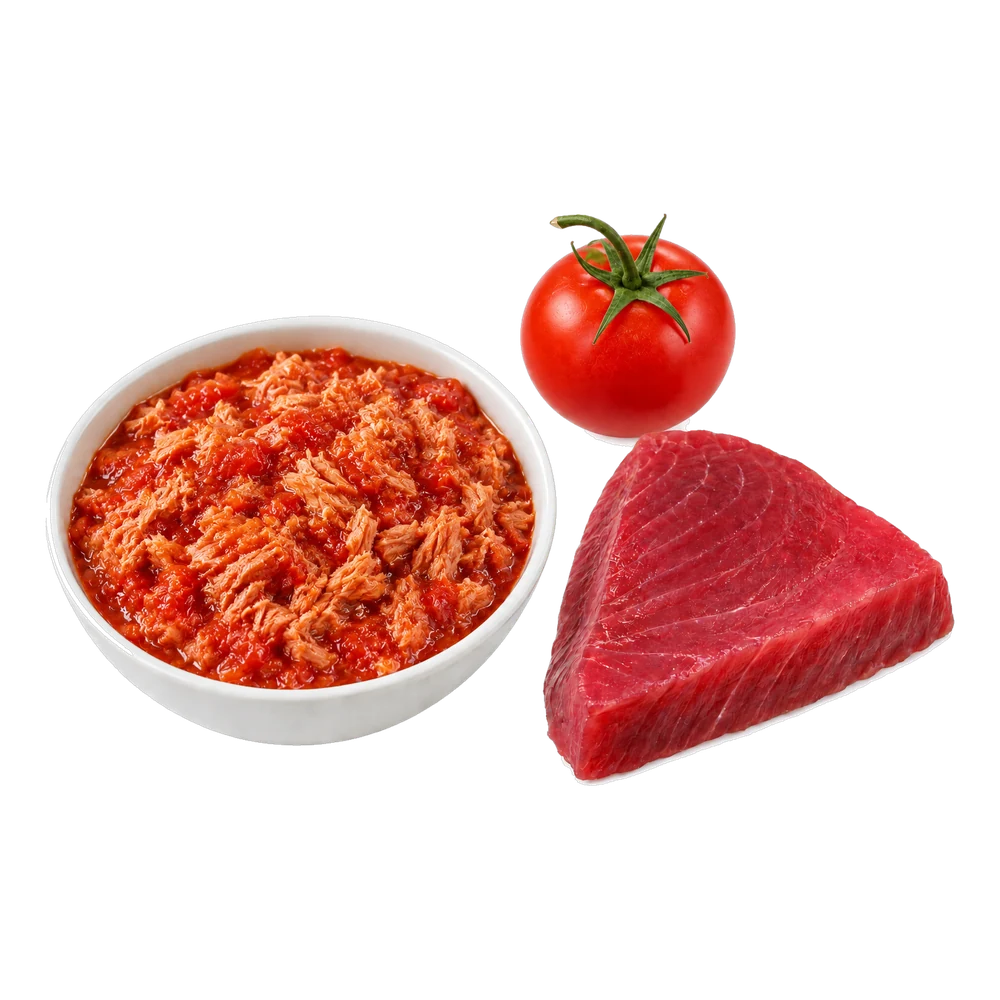
80 g (2.8 oz) · 115 g (4.1 oz)
A flatter fill for bread and sandwich programs. Also produced as an 80 g three-can sleeve.
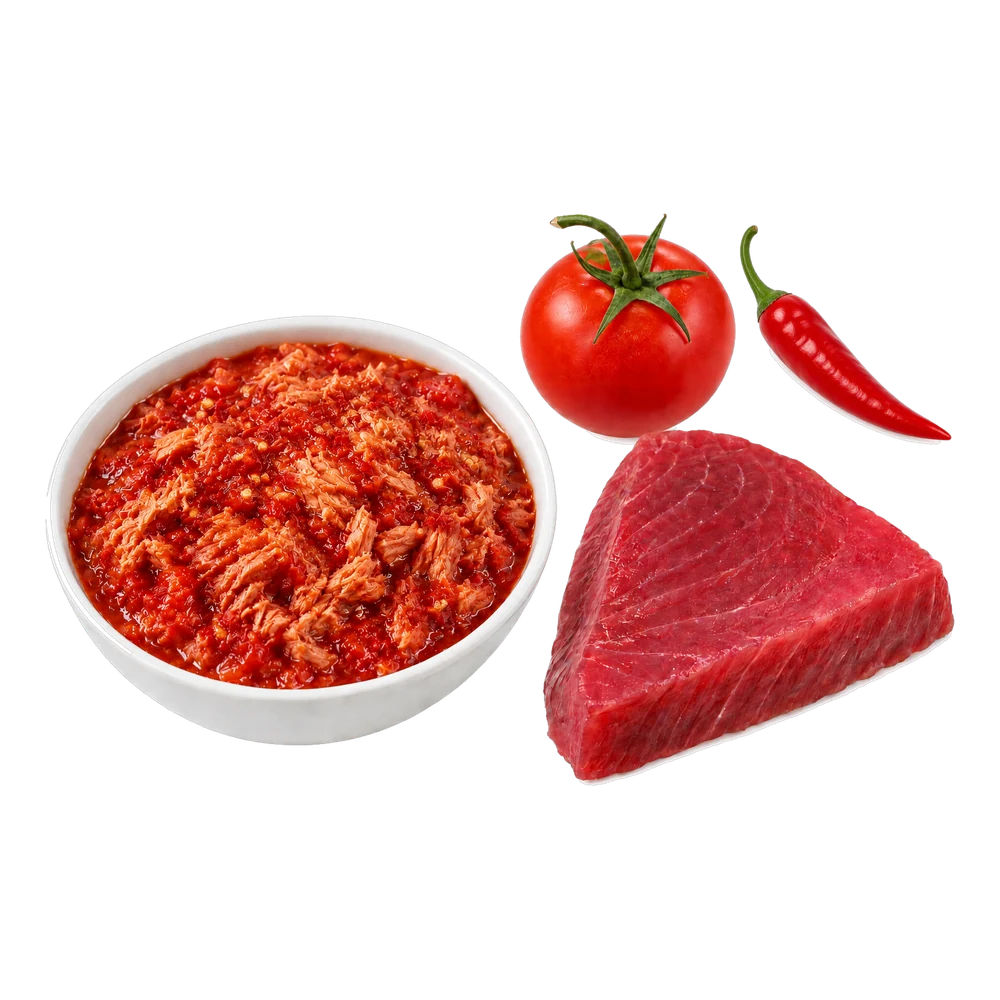
80 g (2.8 oz) · 115 g (4.1 oz)
The same sandwich fill carrying chilli heat through the tomato sauce.
Sandwich denotes a flatter fill intended for bread, not a different species.
Sardines
Both lines are sold as sardine and both are packed in vegetable oil, but they are different animals from different oceans. A program names the species it is buying.
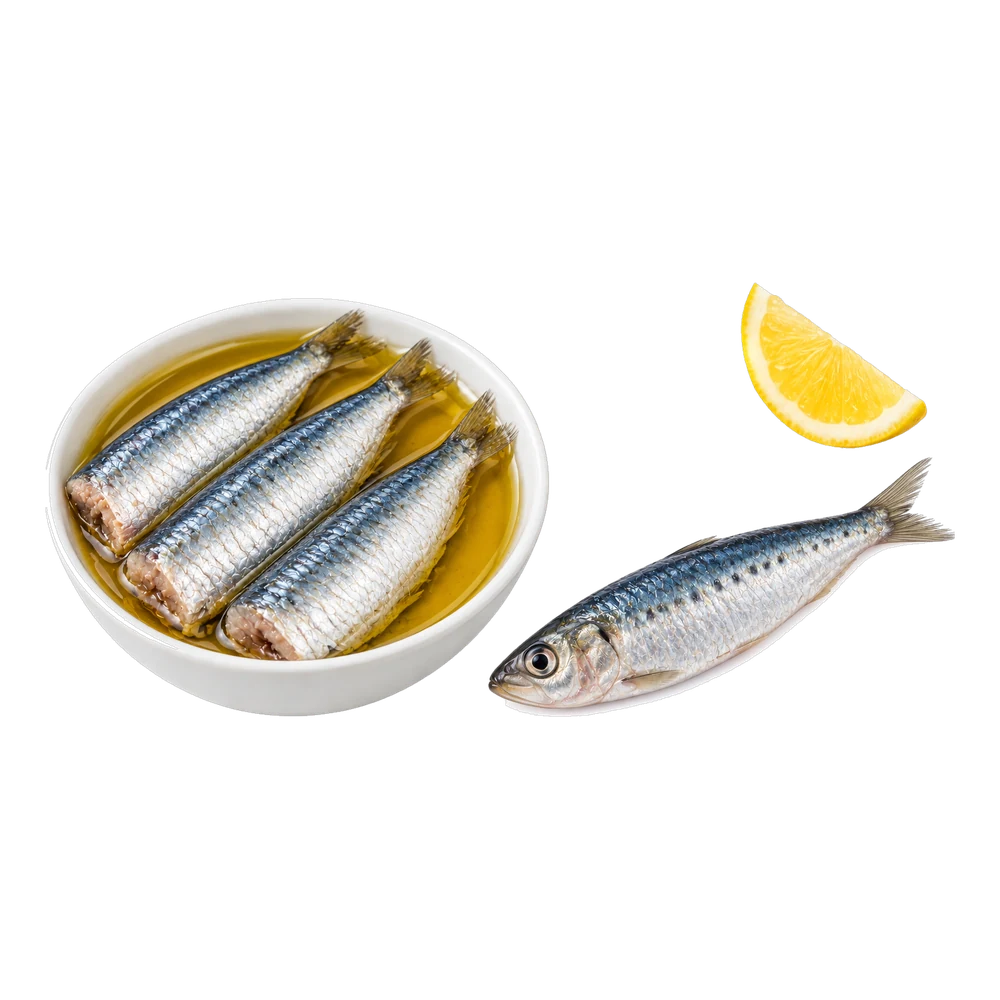
Sardinella longiceps · 125 g (4.4 oz)
Two to five pieces per can, drained 90 g (3.2 oz). Oil to water 70 to 30, salt 2%. Tinplate club can with an easy-open end. Shelf life 3 years.
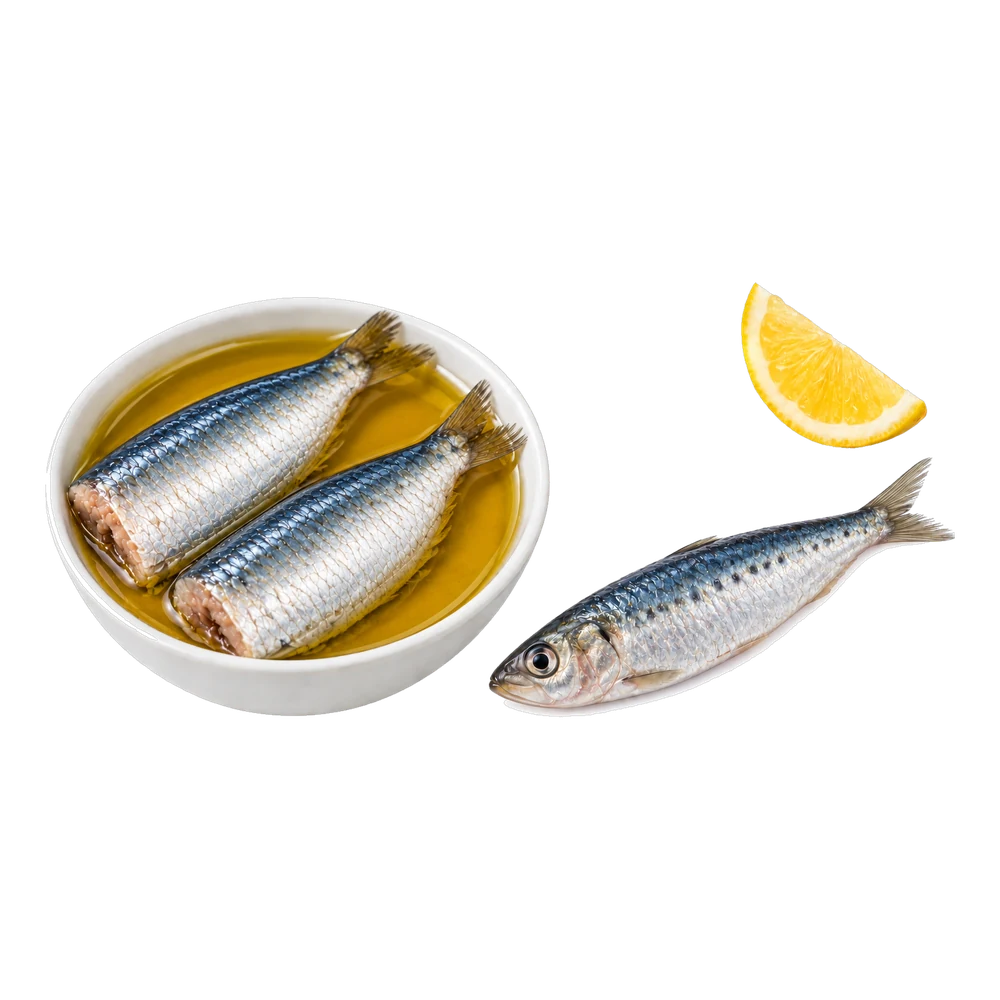
Sardina pilchardus · 120 g (4.2 oz)
Headed, gutted and tailed, precooked and sterilised in the can. Sardine 68%, soybean oil 31%, salt 1%. Drained 85 g (3.0 oz). Shelf life 4 years, 48 hours refrigerated once opened.
Shelf life differs between them as well: three years against four.
The full range
Species and drained weight are the two figures a canned-fish program is quoted on, so both are stated for every line rather than summarised.
Chunk packs. The medium changes the drained weight, so oil and water are quoted as separate lines rather than as one product in two versions.
| Line | Species and catch area | Net and drained weight |
|---|---|---|
| Yellowfin chunk in soybean oil | Thunnus albacares | 142 g (5.0 oz) · drained 98 g (3.5 oz) |
| Yellowfin chunk in water | Thunnus albacares | 142 g (5.0 oz) · drained 98 g (3.5 oz) |
| Skipjack chunks in vegetable oil | Katsuwonus pelamis | Drained not less than 70% of net |
Produced as single cans and as three-can sleeves. The sandwich cut is a flatter fill intended for bread, not a different fish.
| Line | Species and catch area | Net and drained weight |
|---|---|---|
| Whole tuna in tomato sauce | Tuna | 85 g (3.0 oz) · 125 g (4.4 oz) · 85 g x 3 |
| Tuna sandwich in tomato sauce | Tuna | 80 g (2.8 oz) · 115 g (4.1 oz) · 80 g x 3 |
| Tuna sandwich in spicy tomato sauce | Tuna | 80 g (2.8 oz) · 115 g (4.1 oz) · 80 g x 3 |
Two different animals from two different oceans. Both are sold as sardine and a program has to name which one it is buying.
| Line | Species and catch area | Net and drained weight |
|---|---|---|
| Sardines in vegetable oil, club can | Sardinella longiceps | 125 g (4.4 oz) · drained 90 g (3.2 oz) |
| Sardines in vegetable oil, quarter club | Sardina pilchardus · FAO 34 | 120 g (4.2 oz) · drained 85 g (3.0 oz) |
Species, cut, packing medium and drained weight are fixed on the program specification before the first run, because each combination carries its own thermal process and its own documentation.
Request the full current rangePackaging
Six formats across the range. Every can is hermetically sealed and heat sterilised; the club cans carry an easy-open end.
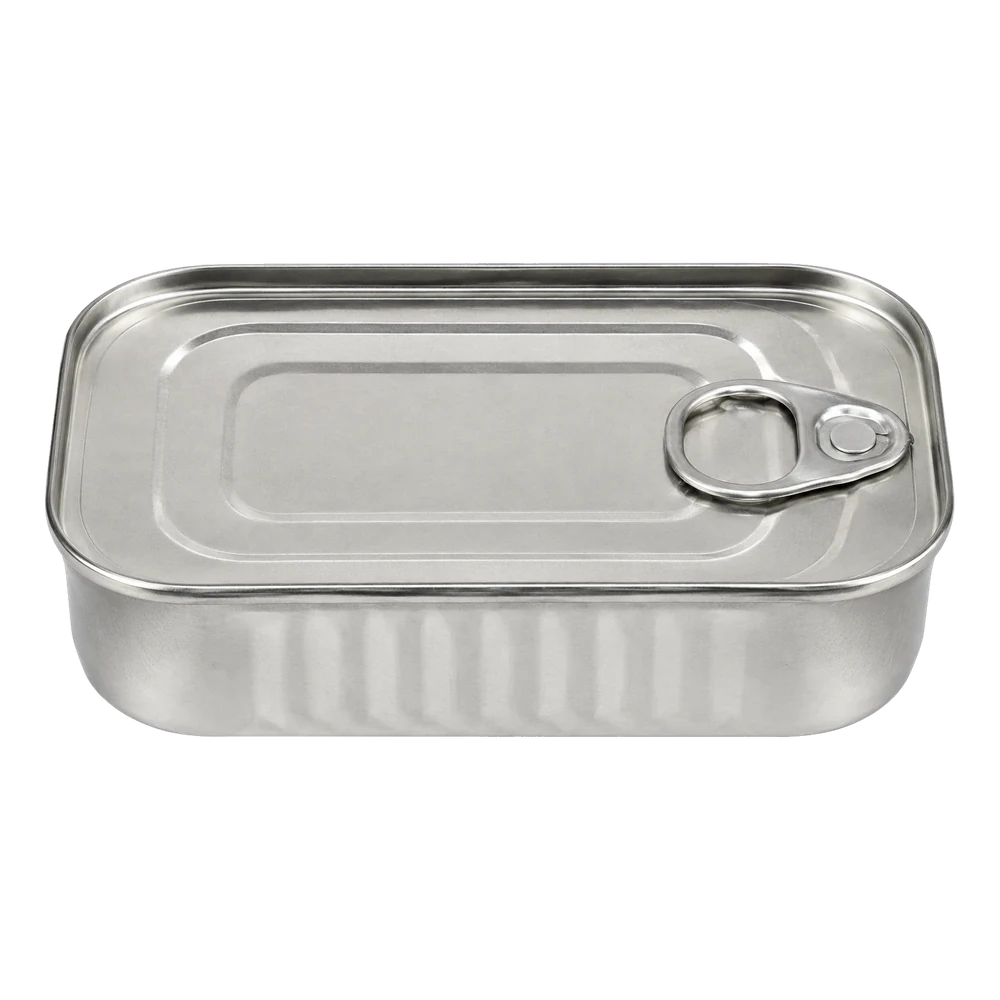
125 g (4.4 oz)
Easy-open end, 113 x 66 x 26.8 mm. The standard sardine retail tin.
See loading →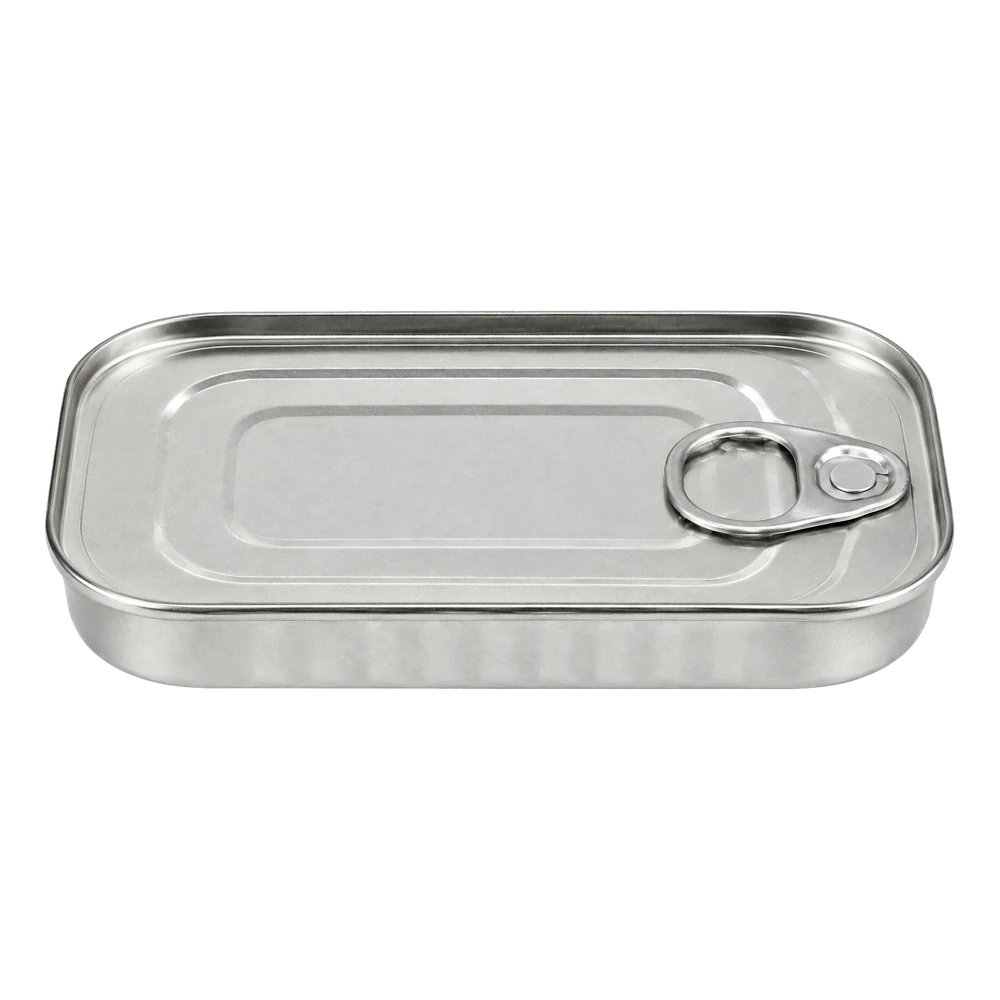
120 g (4.2 oz)
Aluminium quarter-club format, lithographed. Shelf life 4 years.
See loading →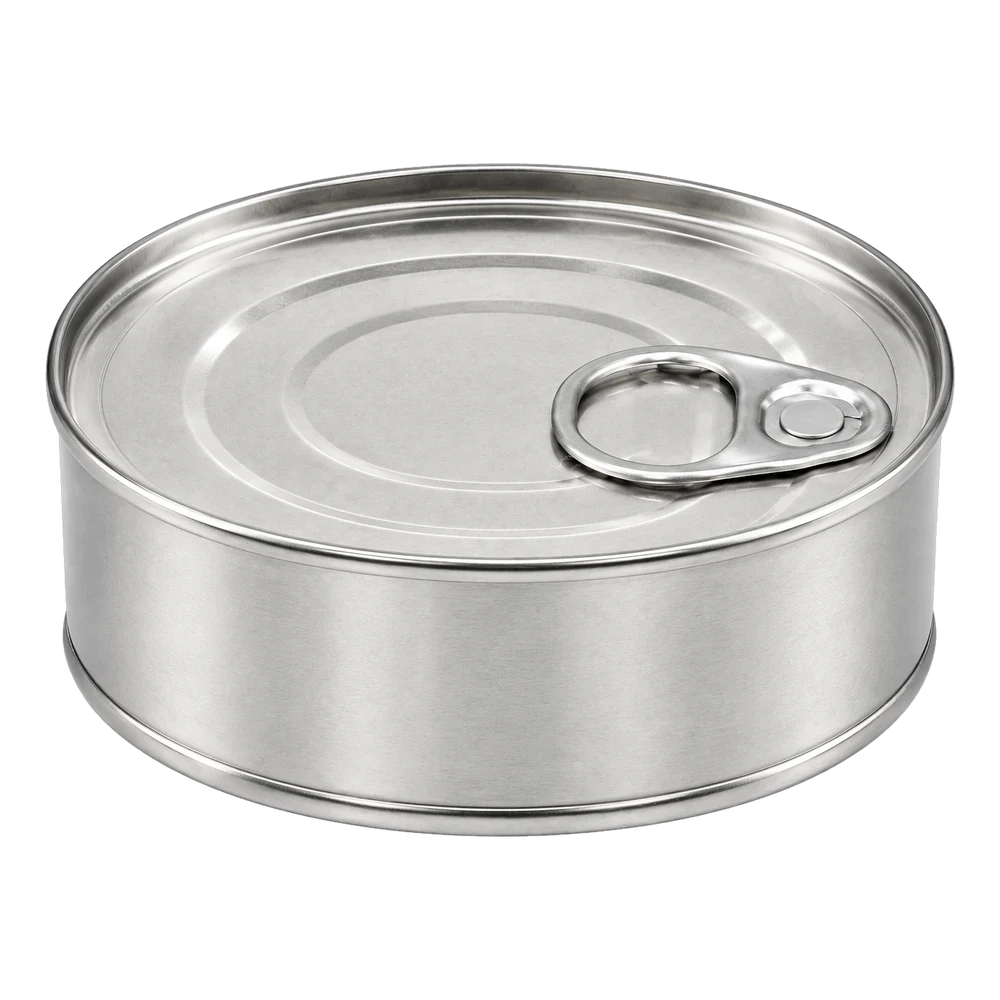
142 g (5.0 oz)
The standard tuna retail can. Carton 349 x 261 x 140 mm, gross 9.1 kg (20.1 lb).
See loading →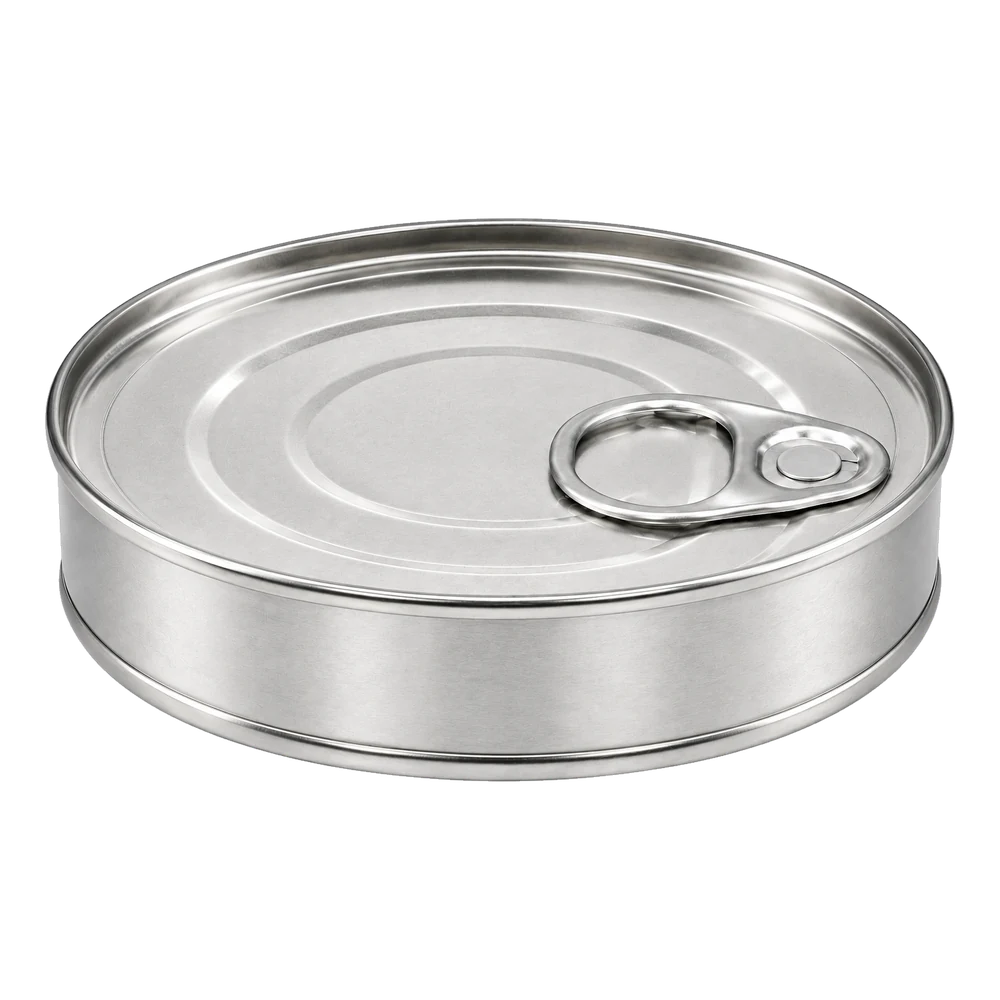
85 g (3.0 oz) · 125 g (4.4 oz)
The tomato-sauce tuna formats, single can.
See loading →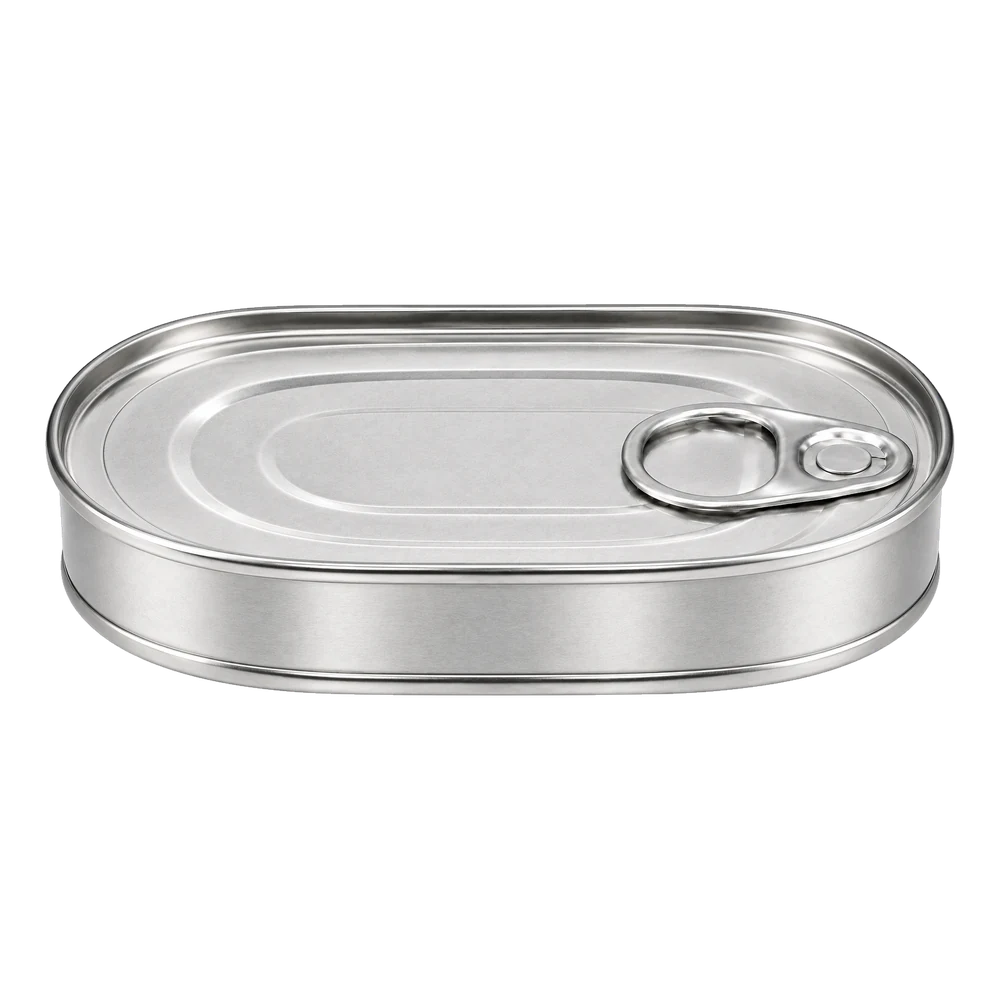
80 g (2.8 oz) · 115 g (4.1 oz)
A flatter can for the sandwich fill.
See loading →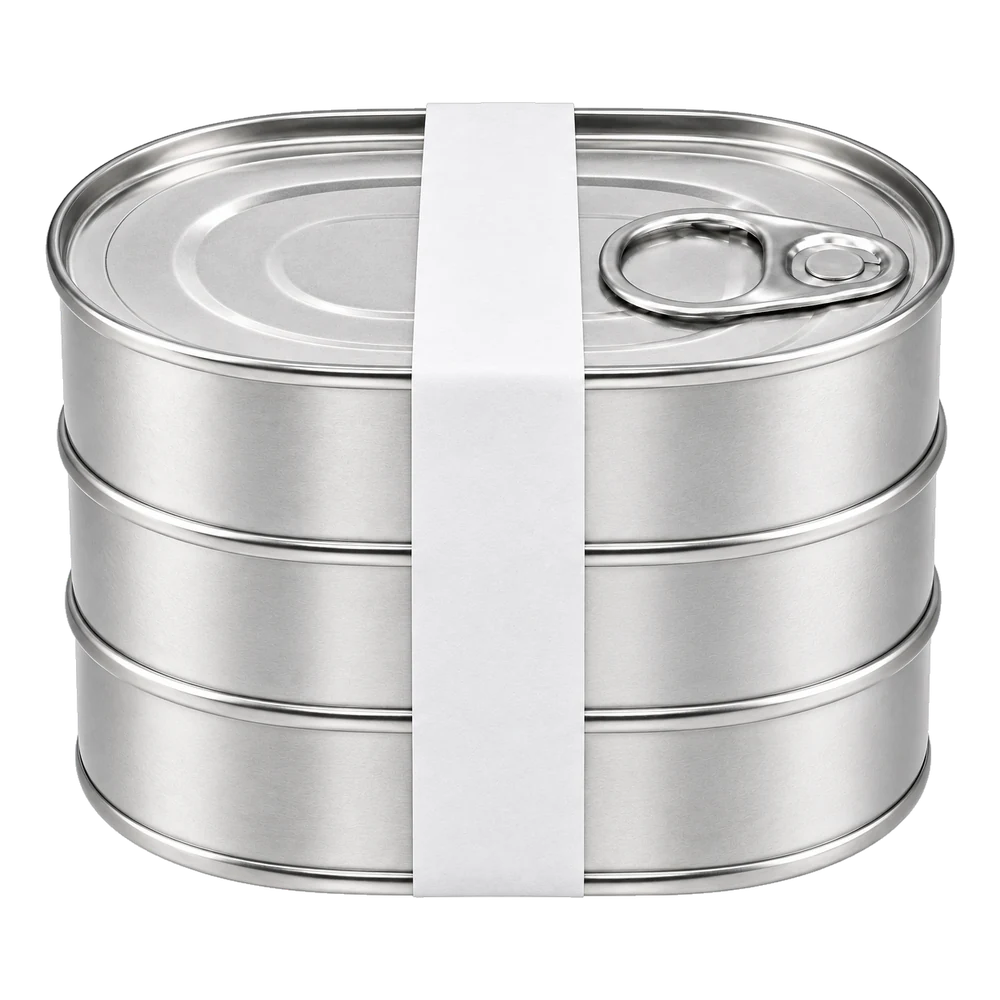
85 g x 3 · 80 g x 3
Three cans sleeved as a retail multipack.
See loading →Loading capacity
Canned fish is dense, so a container reaches its WEIGHT limit before the box is full. The figures below are for the reference tuna line.
| Format | Carton | Cartons per 20 ft |
|---|---|---|
| Round can 307 x 105, 142 g | 9.1 kg (20.1 lb) gross · 349 x 261 x 140 mm | 2,200 cartons |
Maximum gross weight 30,400 kg against an empty-container tare of 2,200 kg. Figures are for the reference line; the other formats are confirmed per program before booking.
Private label
Species, cut, packing medium, can format, artwork and label declarations are configured under your brand, with documentation coordinated for the destination market before the first shipment.
Yellowfin, skipjack or sardine selected, and chunk, solid or sandwich fill confirmed.
Oil, water or tomato sauce, which sets the drained weight and the declaration.
Club, quarter club, round or sandwich can, single or sleeved.
Catch area, species binomial and date marking prepared for the destination market.
Supply execution
Samples follow once a program, specification and commercial terms are agreed.