Refined sunflower oil
PET 500 ml to 5 L · tin · bulk
The reference line. Full specification published above.
Cooking oils
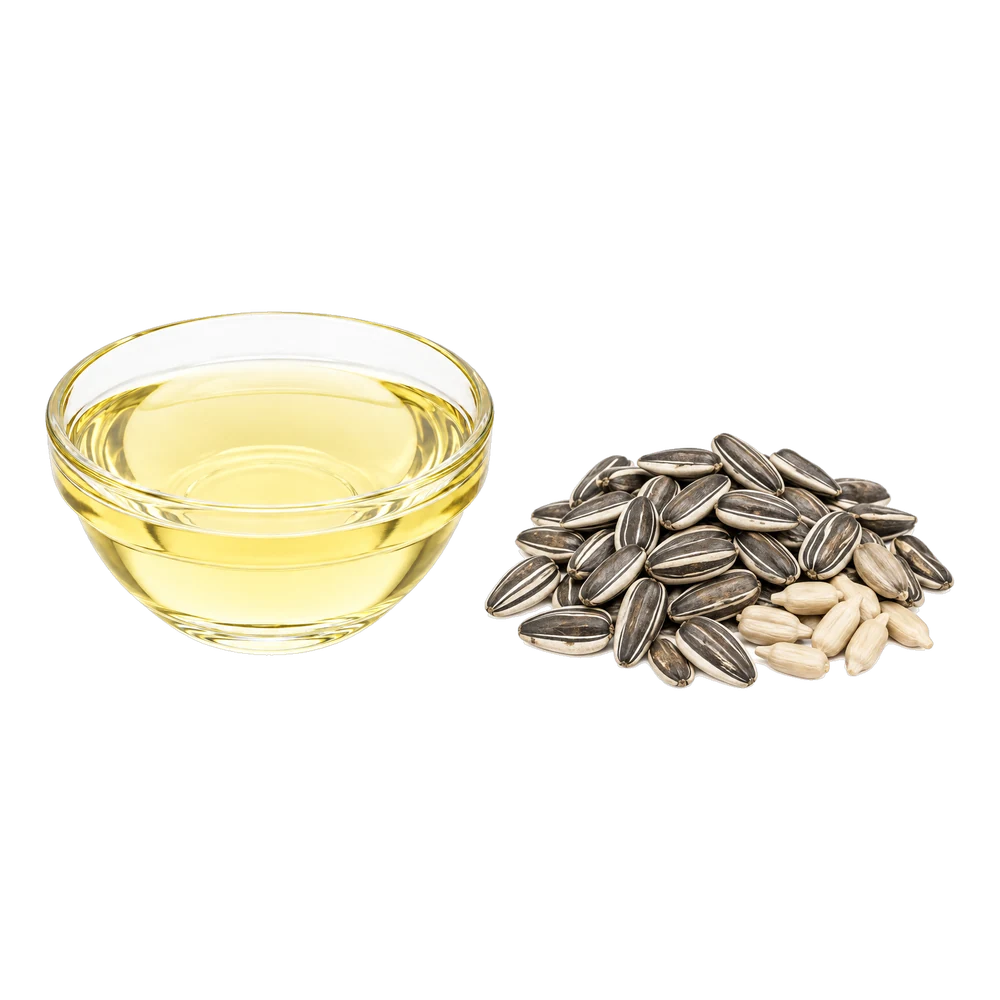
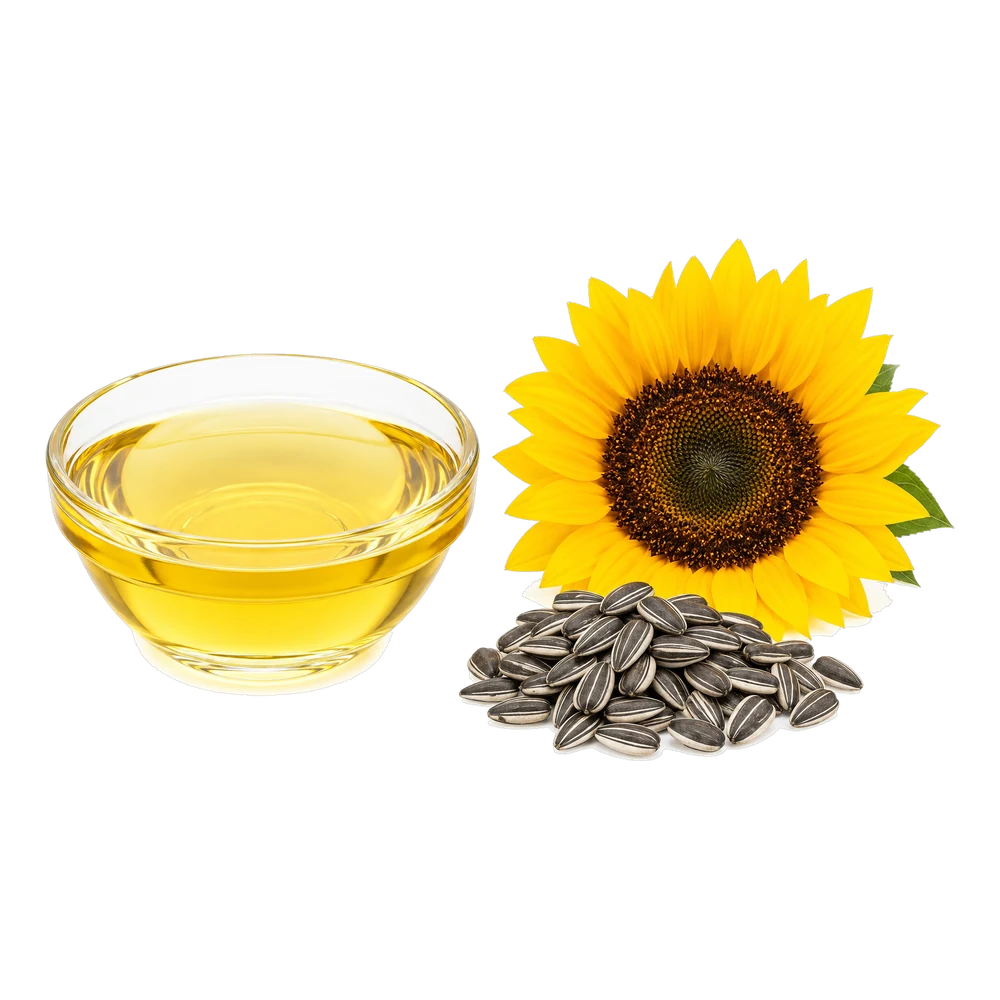
Golden sunflower oil poured into a glass bowl on a dark surface, with sunflower seeds, soybeans and a corn cob
Refined sunflower, soybean, corn, canola and palm olein, high-oleic and frying oils and blends, in PET, tin and bulk formats for retail, foodservice and industrial buyers.
A cooking oil is specified on four numbers before it is specified on a bottle: free fatty acids, peroxide value, color and moisture. They decide how the oil behaves in the pan and how long it keeps on the shelf, and they are the same numbers whether the format is a one liter PET bottle or a flexitank.
Reference product
The highest-volume line in the range and the one carrying the fullest documentation, so its complete specification is published below. Every other oil follows its own sheet on the same standard, confirmed for the selected program.
Technical specification
The specification for the reference line, with the reference standard recorded against each limit. Soybean, corn, canola, palm olein, high-oleic and frying oils carry their own sheets, confirmed for the selected program.
OriginEgyptSpainTurkey
| Product | Refined sunflower oil |
|---|---|
| Definition | Oil obtained from the seed of Helianthus annuus, refined, bleached and deodorized |
| Ingredients | 100% sunflower oil; no additives |
| Appearance | Clear, bright liquid, pale yellow |
| Taste and odor | Bland; free of rancidity and foreign odor |
| Reference standard | Codex Standard for Named Vegetable Oils, CODEX STAN 210-1999 |
| Free fatty acids | Not more than 0.10% as oleic acid |
|---|---|
| Acid value | Not more than 0.6 mg KOH per g |
| Peroxide value | Not more than 10 meq of active oxygen per kg |
| Moisture and volatiles | Not more than 0.1% |
| Color | Not more than 1 red and 8 yellow, Lovibond 5.25 inch cell |
| Soap and wax | Soap not more than 5 ppm; wax not more than 20 ppm |
| Relative density | 0.918 to 0.923 at 20 degrees C |
| Refractive index | 1.461 to 1.468 at 40 degrees C |
| Saponification value | 188 to 194 mg KOH per g |
| Iodine value | 118 to 141 |
| Iron | Not more than 1.5 mg per kg |
|---|---|
| Copper | Not more than 0.1 mg per kg |
| Lead | Not more than 0.08 mg per kg |
| Arsenic | Not more than 0.1 mg per kg |
| Pesticide residues and other contaminants | Within the limits of the destination market; results issued per lot |
| Allergen | None for sunflower oil. Fully refined soybean oil is exempt from allergen labeling in the United States and the European Union; the declaration is reviewed for each destination market |
|---|---|
| Shelf life | Stated per oil and format on the program specification, counted from the date of production |
| Storage | Ambient, protected from light and heat, away from strong odors; palm olein may cloud below 10 degrees C and clears on warming |
| Order and schedule | Minimum order, lead time and delivery schedule are defined by the nature and breakdown of each supply program - product, format, brand and destination - and confirmed with the quotation. |
|---|---|
| Incoterms and payment | Programs are executed under Incoterms® 2020 - FOB, CFR, CIF, and DAP or DDP for selected destinations. Payment terms and shipment plan are confirmed with the quotation. |
Origin is confirmed for the selected program and stated on the shipping documents. Shelf life is counted from the date of production. Remaining shelf life at delivery depends on the production slot and transit for the selected program and is stated on the program sheet.
| Energy | 3,700 kJ / 900 kcal |
|---|---|
| Fat | 100 g |
| of which saturates | 13 g |
| of which monounsaturates | 27 g |
| of which polyunsaturates | 60 g |
| Carbohydrate | 0 g |
| Protein | 0 g |
| Salt | 0 g |
Every producing site is qualified before it enters a program: HACCP is a baseline requirement, and, where the program requires a recognized food-safety certification (FSSC 22000, BRC or ISO 22000), the program is structured around a site holding the required current certificate, with the certificate, its scope and its expiry confirmed in writing for the selected product before the first order. Sites subject to FDA food facility registration must hold a current registration; applicability and exemptions are checked for the selected program. Cooking oil programs additionally carry analysis against CODEX STAN 210-1999 and the standard of the destination market, per lot. Batch-specific analysis, applicable certificates and export documentation are provided to qualified buyers. Compliance and quality · US import compliance and FSVP.
Documents available on request: Technical Data Sheet, certificate of analysis per lot (free fatty acids, peroxide, color, moisture, contaminants), safety data sheet, Certificate of Origin, health certificate, applicable certification documentation, and shipping and commercial documents.
Figures are the specification limits for the reference line and are confirmed on the program specification before order.
Seed oils
Six oils, each with the seed it is pressed from. Sunflower is the reference line; the others follow their own sheets on the same standard.
PET 500 ml to 5 L · tin · bulk
The reference line. Full specification published above.
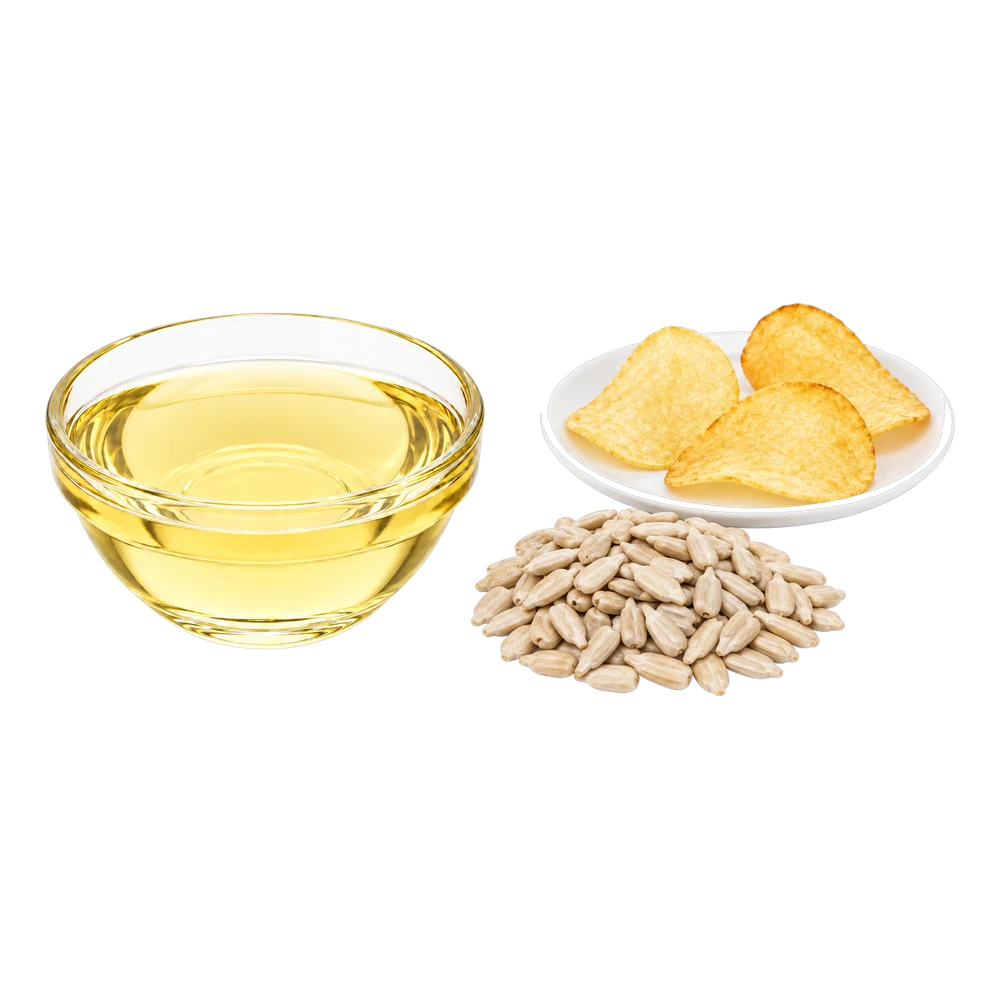
60% or 80% oleic
The frying grade: more stable at heat and longer in the fryer than standard sunflower.
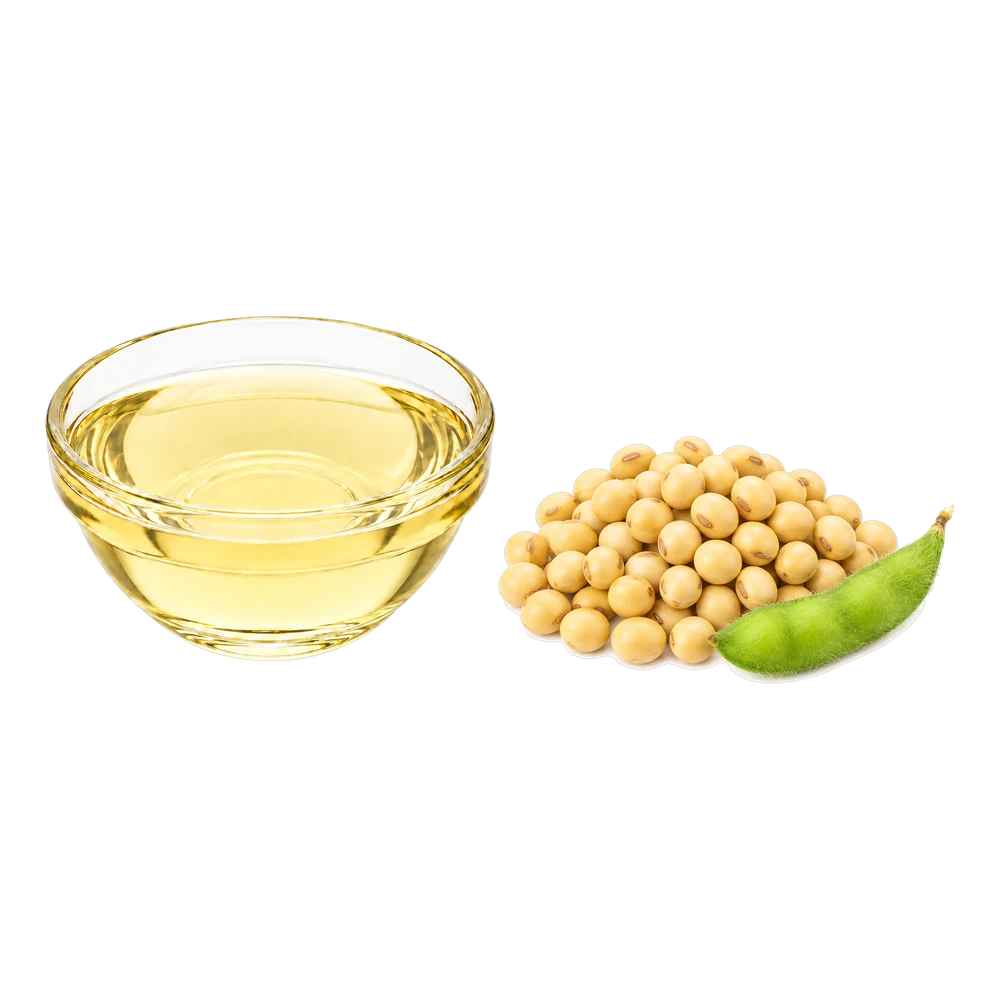
PET 1 L · 5 L · bulk
Neutral everyday oil for retail and food manufacturing.
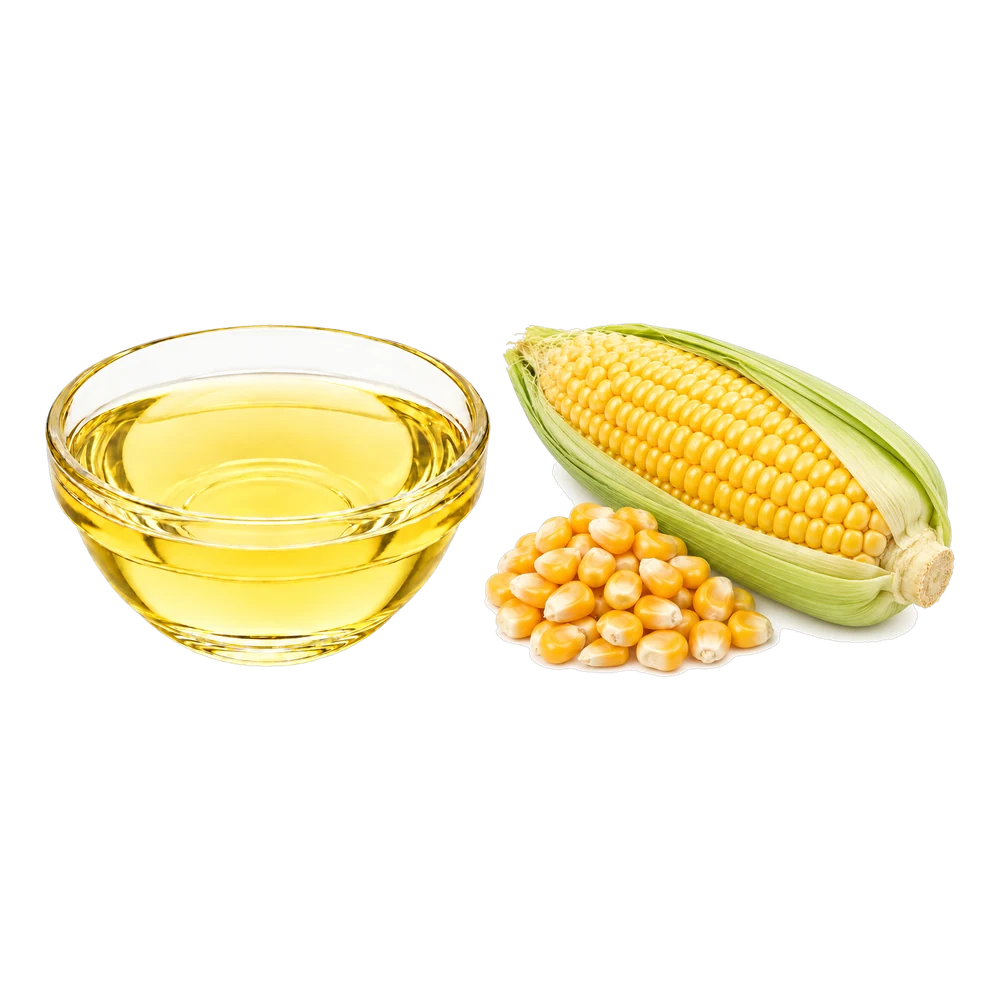
PET 1 L · 3 L · bulk
Golden retail oil for general cooking.
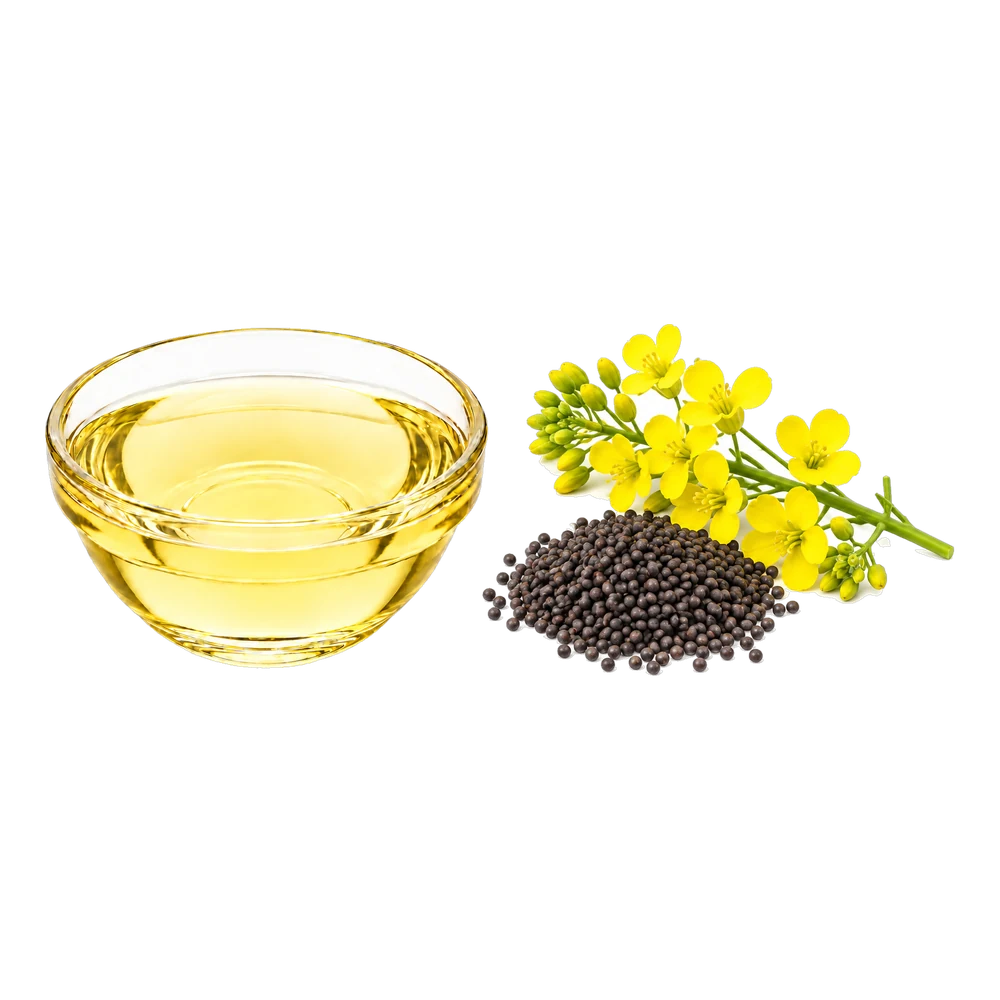
PET 1 L · 3 L · 5 L · pot 10 L
Light oil for retail programs where a low saturated-fat profile is asked for.
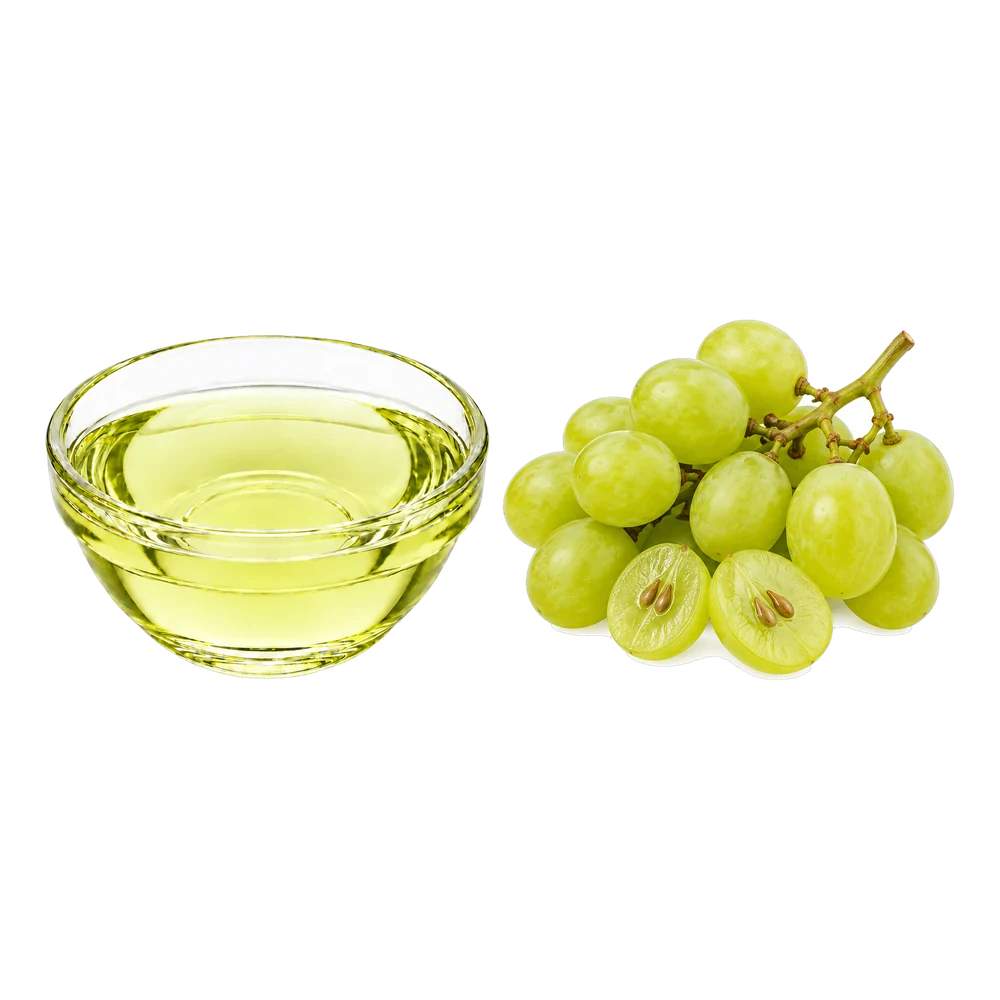
Glass 750 ml · 1 L
Premium retail line in glass.
Fatty-acid profile, color and free fatty acids are stated per oil on the program specification.
Frying oils, blends and palm
The foodservice and industrial side of the range: built for the fryer, for cost per liter and for warm-market distribution.
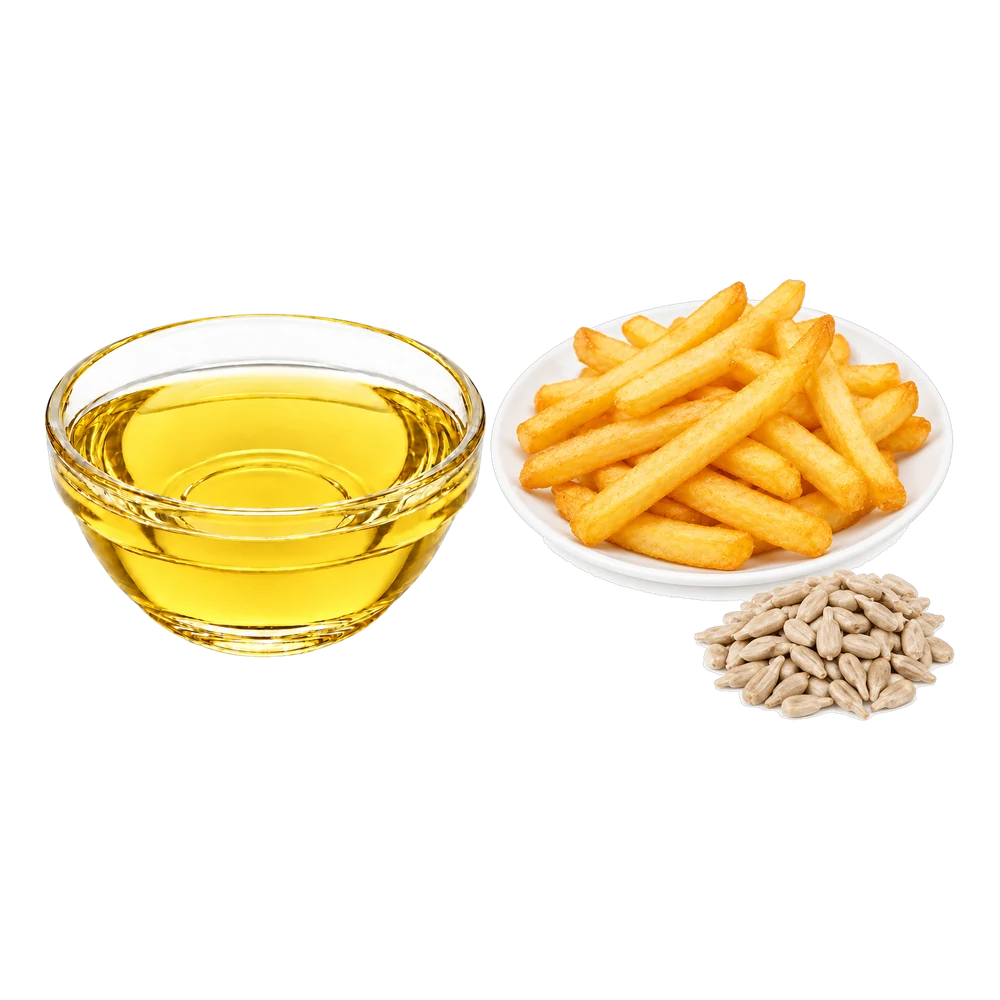
Not less than 60% oleic · antifoam
High-stability frying oil for restaurants, catering and industrial fryers.
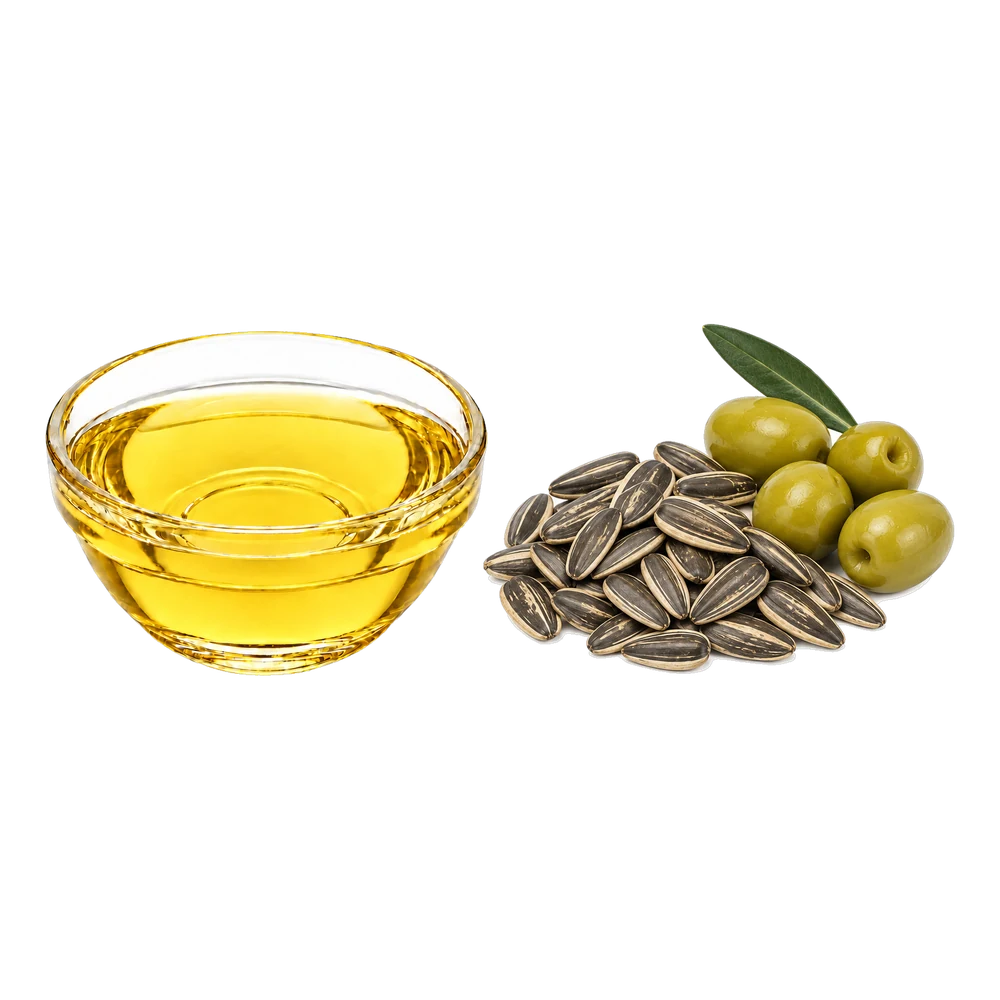
Sunflower with olive · soybean with sunflower
Configurable blends for everyday retail at a lower price point.
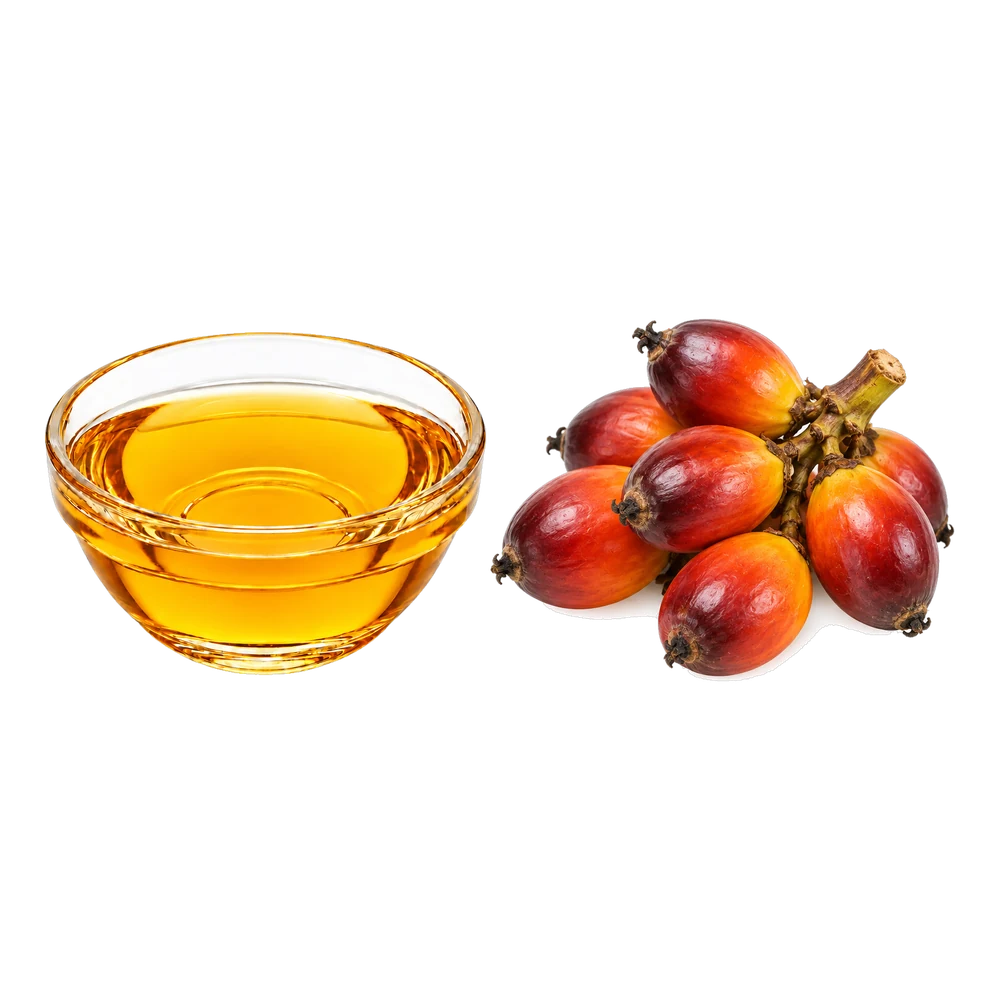
PET 1 L to 5 L · tin · bulk
Frying and industrial staple; may cloud below 10 degrees C and clears on warming.
Antifoam and oleic content are fixed on the program specification.
The full range
Every line is a refined, bleached and deodorized oil specified on the same four numbers. What separates them is the seed, the fatty-acid profile it brings, and the use it is bought for.
The everyday retail and kitchen oils. Sunflower carries the full specification above; the others follow their own sheets on the same standard.
| Line | Bought for | Formats produced today |
|---|---|---|
| Refined sunflower oil | Retail, general cooking | PET 500 ml to 5 L; tin 5 L and 18 L; pot 10 L to 25 L; bulk |
| High-oleic sunflower oil, 60% and 80% oleic | Foodservice frying, stable at heat | PET 5 L and 25 L; pot 10 L and 25 L; bulk |
| Refined soybean oil | Retail, general cooking, industry | PET 1 L and 5 L; bulk |
| Refined corn oil | Retail, general cooking | PET 1 L and 3 L; bulk |
| Refined canola oil | Retail, light cooking | PET 1 L, 3 L and 5 L; pot 10 L |
| Grapeseed oil | Retail, premium | Glass 750 ml and 1 L |
Built for the fryer and for cost per liter: higher oleic content and an antifoam agent where the program asks for it.
| Line | Bought for | Formats produced today |
|---|---|---|
| Sunflower frying oil, not less than 60% oleic, with antifoam | Foodservice and industrial frying | PET 2 L, 3 L and 25 L; pot 10 L; spray 200 ml |
| Refined seed frying oils | Foodservice frying | PET 5 L and 25 L; pot 10 L and 25 L |
| Blended oils, sunflower with olive or soybean with sunflower | Retail, everyday cooking at a lower price point | PET 1 L, 2 L and 5 L; pot 10 L |
The frying and industrial staple where a semi-solid fraction is wanted.
| Line | Bought for | Formats produced today |
|---|---|---|
| Refined palm olein | Frying, industrial and retail in warm markets | PET 1 L to 5 L; tin; bulk |
Formats are as produced today across the producing sites; a program is configured to one site, and the case configuration is fixed on the program specification before artwork is prepared.
Request the full current rangePackaging
Six formats across retail, foodservice and industrial use. Retail in PET, foodservice in large PET and tin, industry in jerrycans, drums, IBC and flexitank. Every packed format takes private-label artwork.
Illustrative pack; final artwork confirmed for the program.
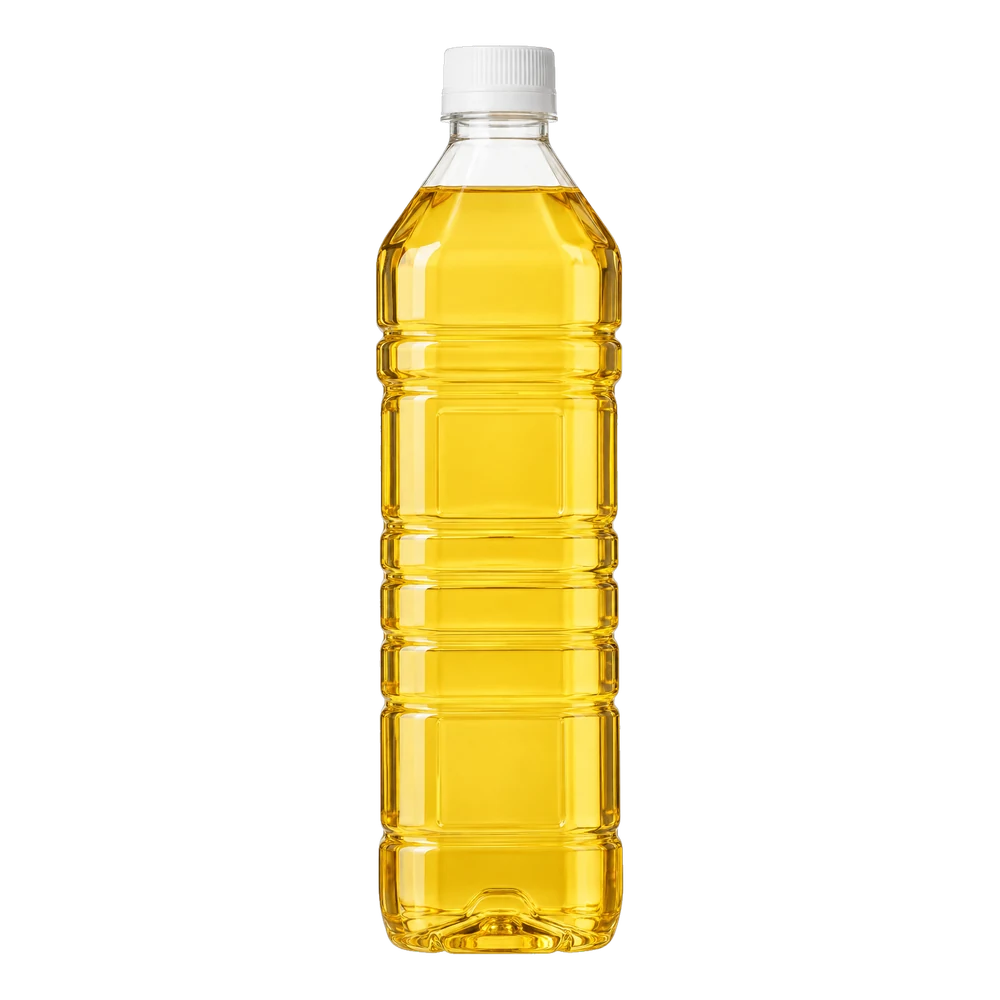
500 ml · 1 L · 1.8 L · 2 L (16.9 · 33.8 · 60.9 · 67.6 US fl oz)
The shelf format. Square or round PET with a screw cap; the 1.8 L and 2 L sizes carry a handle.
See the oils →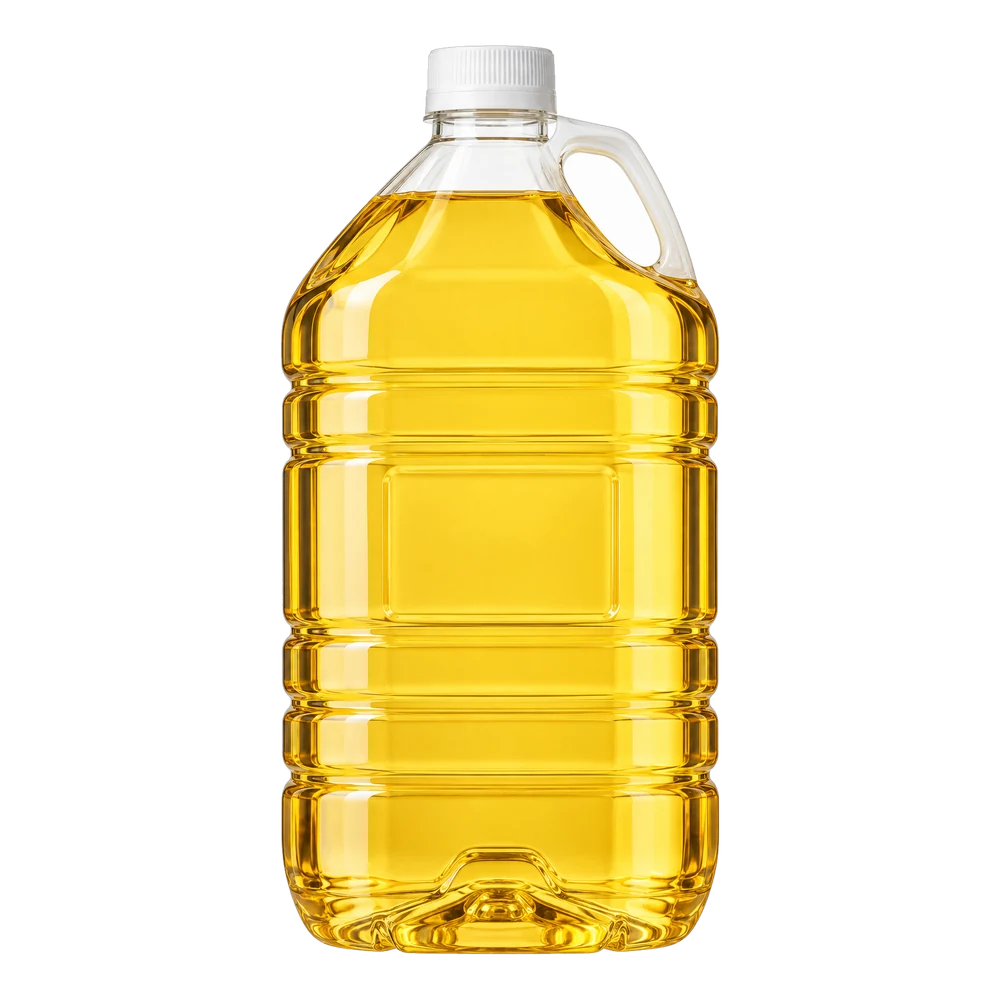
3 L · 5 L (0.8 · 1.3 US gal)
The family and small-kitchen sizes, with a molded handle and a screw cap.
See the oils →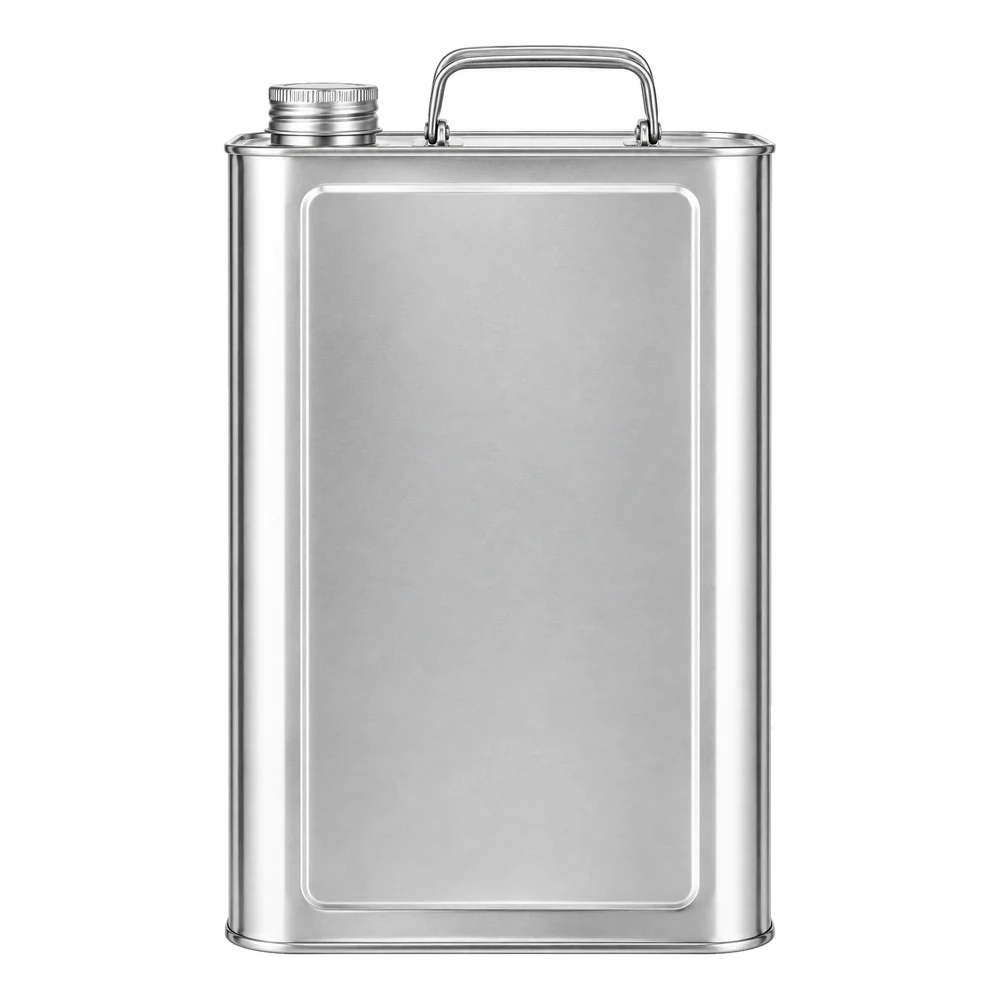
5 L (1.3 US gal)
Rectangular tin with a screw cap and a handle, fully light-protected.
See frying oils →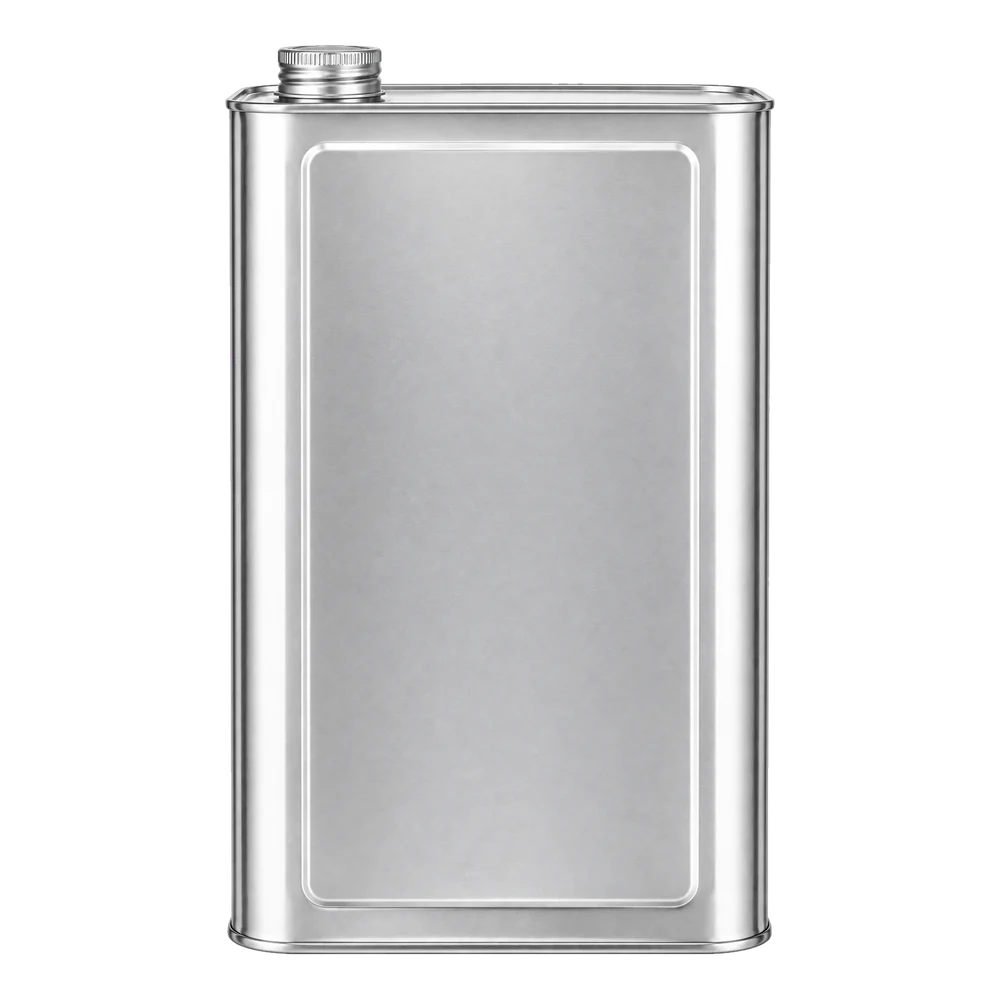
18 L (4.8 US gal)
The catering tin for restaurants and central kitchens.
See frying oils →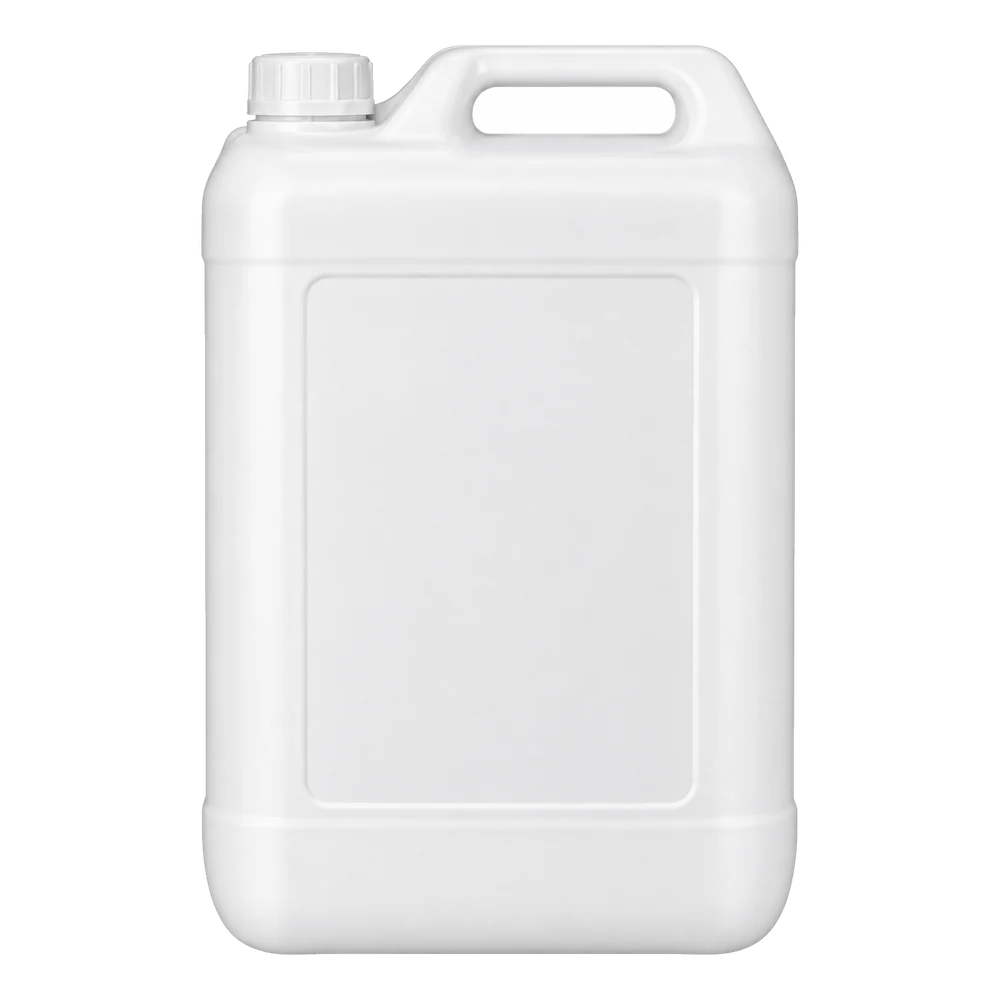
10 · 20 · 25 L (2.6 · 5.3 · 6.6 US gal)
HDPE jerrycan or food-grade pot with a screw cap for kitchens, bakeries and repacking.
Request a quote →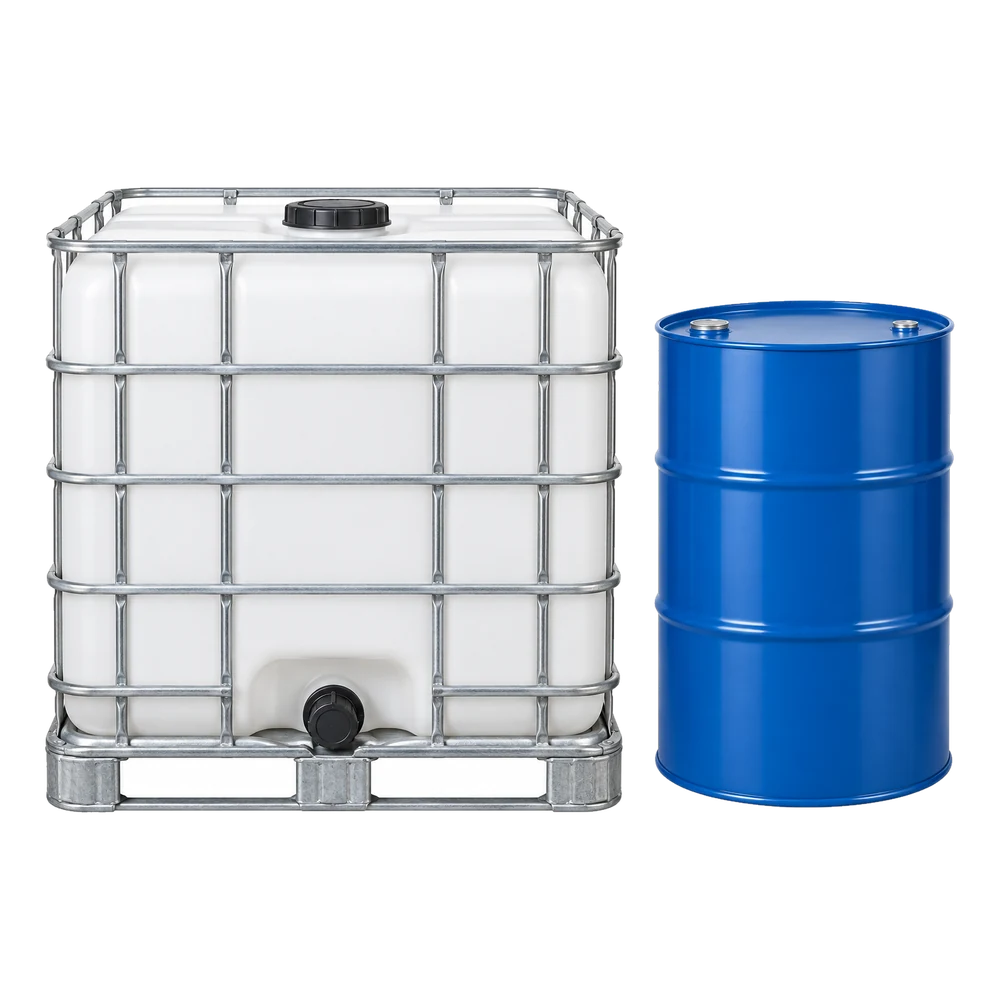
Drum 200 kg (441 lb) · IBC 1,000 L (264 US gal) · flexitank
Steel drum, IBC tote or flexitank for food manufacturing and refilling lines.
Request a quote →Loading capacity
Approximate cartons per container for the three retail sizes, as loaded by the producing sites. Oil is dense, so the larger bottles reach the weight limit before the box is full.

| Pack size | Case | Cartons per 20 ft | Cartons per 40 ft |
|---|---|---|---|
| PET 1 L (33.8 US fl oz) | 12 per case | approx. 1,180 to 1,230 cartons | approx. 2,250 to 2,400 cartons |
| PET 3 L (0.8 US gal) | 4 per case | approx. 1,000 cartons | approx. 2,000 cartons |
| PET 5 L (1.3 US gal) | 4 per case | approx. 630 cartons | approx. 1,300 cartons |
Figures are approximate and vary by producing site and bottle shape. Actual loading is confirmed at the time of loading.

Private label
Oil, grade, bottle, closure, artwork and label declarations are configured under your brand, with analysis and documentation aligned to the destination market before the first shipment.
Sunflower, soybean, corn, canola, palm olein or a blend selected, and the specification fixed against a retained sample.
Bottle shape, cap, case configuration and artwork coordinated for the brand.
Analysis against CODEX STAN 210-1999 and the destination standard, specification and labeling reviewed before the first order.
Dispatch planned at ambient temperature with protection from light and heat.
Supply execution
Samples follow once a program, specification and commercial terms are agreed.